What Is an ETF? A Complete Beginner's Guide
1. Quick Answer: What Is an ETF?
An ETF, or exchange-traded fund, is a basket of investments that trades on a stock exchange like a single stock. Instead of buying one company, one bond, or one commodity exposure, you buy one fund that may hold dozens, hundreds, or even thousands of investments.
The easiest way to understand it: imagine a grocery basket. A stock is one apple. A bond is one loaf of bread. An ETF is the whole basket. When you buy one ETF share, you own a small slice of everything inside that basket.
For a beginner, ETFs are popular because they can make diversification simple. A broad stock market ETF can give exposure to many companies in one trade. A bond ETF can give exposure to many bonds. A dividend ETF can focus on income-paying companies. A sector ETF can focus on areas such as technology, healthcare, energy, or real estate.
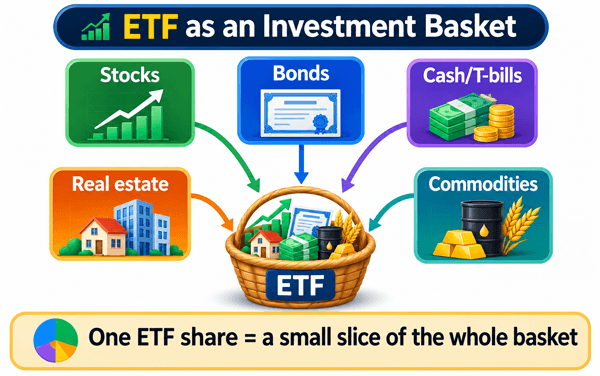
Figure 1: An original simplified illustration of an ETF as an investment basket.
The one-sentence beginner definition
An ETF is an investment fund that holds a portfolio of assets and can be bought or sold on an exchange during the trading day.
1.1 What makes an ETF different?
- It trades like a stock: You can buy or sell it while the market is open.
- It behaves like a fund: It holds a portfolio, not just one security.
- It usually has a ticker: Examples look like stock symbols, such as a three- or four-letter code.
- It has ongoing costs: The expense ratio is deducted inside the fund over time.
- It carries risk: ETF shares are not bank deposits and are not FDIC-insured.
2. How ETFs Work in Plain English
An ETF has two layers. The first layer is the fund itself: it owns assets according to a stated objective. The second layer is the exchange: investors buy and sell ETF shares from each other during market hours.
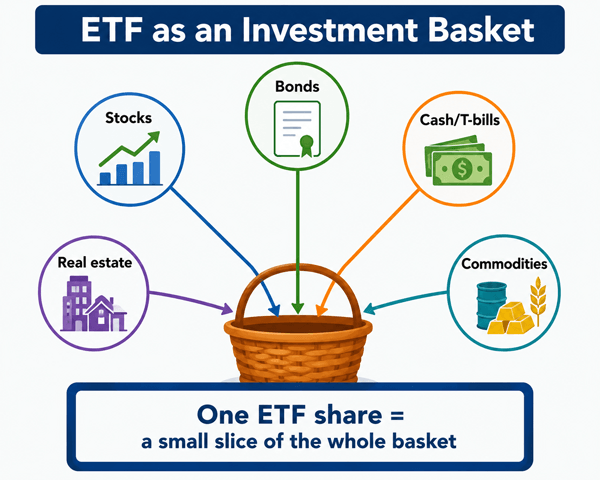
Figure 2: ETF shares trade on an exchange, while the fund holds the underlying assets.
2.1 The three prices beginners should understand
| Term | Plain-English meaning | Why it matters |
|---|---|---|
| Market price | The price people are paying for the ETF share right now. | This is the price you usually see in your brokerage app during market hours. |
| NAV (net asset value) | The value of the ETF's underlying holdings per share. | It helps show what the basket is worth based on what it owns. |
| Bid-ask spread | The gap between what buyers offer and sellers ask. | A wide spread can quietly increase your trading cost, especially in thinly traded ETFs. |
In normal conditions, the ETF market price usually stays close to its NAV because professional market participants can create or redeem ETF shares. This mechanism is not magic and does not remove investment risk, but it helps ETFs trade efficiently. The SEC and Investor.gov emphasize that ETFs have risks, costs, and disclosure documents that investors should read before investing.
3. A Simple Real-Life Example
Suppose Aisha wants to start investing but does not know how to choose individual stocks. She has $500 and wants long-term growth for retirement. She could buy one or two individual stocks, but if those companies perform badly, her money is heavily exposed to those few choices.
Instead, she considers a broad market index ETF. That ETF may hold hundreds of companies across different sectors. With one purchase, she gets exposure to technology, healthcare, financial companies, consumer businesses, industrial companies, and more.
| Choice | What Aisha owns | Main advantage | Main risk |
|---|---|---|---|
| One stock | One company | Simple and exciting if the company performs well. | Company-specific risk is high. |
| Five random stocks | Five companies | More diversified than one stock. | Still concentrated; may not cover the market. |
| Broad index ETF | Hundreds or thousands of securities | Instant diversification with one fund. | Still exposed to market declines. |
| Bond ETF | A basket of bonds | Potential income and lower volatility than stocks in many periods. | Interest-rate and credit risk. |
This is why many beginner investors use ETFs as building blocks. The ETF does not guarantee profit. It simply packages exposure in a cleaner, more diversified, and often lower-cost way than buying many securities one by one.
4. ETF vs Stock vs Mutual Fund vs Index Fund
Beginners often mix up ETFs, mutual funds, index funds, and stocks. The differences matter because each one behaves differently in your account.
| Feature | ETF | Stock | Mutual fund | Index fund |
|---|---|---|---|---|
| What it is | A fund that trades on an exchange. | Ownership in one company. | A pooled fund priced after market close. | A strategy that tracks an index; can be an ETF or mutual fund. |
| Diversification | Often high, depending on holdings. | Low unless the company is diversified internally. | Often high, depending on fund. | Often high if the index is broad. |
| Trading | Intraday like a stock. | Intraday. | Usually once per day at end-of-day NAV. | Depends on wrapper: ETF or mutual fund. |
| Costs | Expense ratio; possible spread and trading costs. | No fund expense ratio, but trading costs may apply. | Expense ratio; possible loads or fees. | Usually low-cost, but not always. |
| Best for | Building diversified portfolios with flexibility. | Investors who can research individual companies. | Automatic investing and traditional fund investors. | Long-term investors seeking market exposure. |
4.1 The key point
An ETF is a container. An index is a recipe. A stock is one ingredient. A mutual fund is another container. So an S&P 500 ETF and an S&P 500 mutual fund may follow a similar recipe, but they are packaged differently.
5. Types of ETFs Beginners See Most Often
Not all ETFs are beginner-friendly. Some are simple, broad, and low-cost. Others are narrow, leveraged, inverse, options-based, cryptocurrency-linked, or designed for short-term trading. A beginner should understand the purpose before buying.
| ETF type | What it holds or targets | Beginner use case | Watch out for |
|---|---|---|---|
| Broad market stock ETF | Large collection of stocks, often across the whole market. | Core long-term growth holding. | Market crashes still hurt. |
| S&P 500 ETF | Large U.S. companies in the S&P 500 index. | Simple U.S. large-cap exposure. | Not fully global; concentrated in large companies. |
| Total international ETF | Stocks outside the investor's home country. | Global diversification. | Currency and country risk. |
| Bond ETF | Government, corporate, municipal, or mixed bonds. | Income and portfolio balance. | Interest-rate risk and credit risk. |
| Dividend ETF | Companies with dividend history or high yield. | Income-focused investing. | High yield can signal weak companies or sector concentration. |
| Sector ETF | One sector, such as technology or healthcare. | Targeted exposure. | More concentrated than broad market ETFs. |
| Commodity ETF | Gold, oil, or other commodity exposure. | Inflation hedge or diversification tool. | Can be volatile and tax treatment may differ. |
| Thematic ETF | Themes like AI, clean energy, robotics, cybersecurity. | Small satellite allocation for a strong view. | Marketing can be stronger than fundamentals. |
| Leveraged/inverse ETF | Uses derivatives to magnify or reverse daily returns. | Usually trading, not beginner long-term investing. | Can lose money quickly and behave badly if held too long. |
6. ETF Costs: What You Pay and What Beginners Miss
ETF investing is often marketed as low-cost investing, and many ETFs are genuinely cheap. But “low cost” does not mean “free.” A smart beginner checks total cost, not just the advertised expense ratio.
| Cost | How it shows up | Beginner tip |
|---|---|---|
| Expense ratio | Annual fund operating cost deducted inside the ETF. | Lower is usually better for broad index exposure, but compare similar ETFs only. |
| Bid-ask spread | Difference between buying and selling price. | Use limit orders and avoid trading during chaotic market minutes. |
| Brokerage commission | Fee charged by brokerage, if any. | Many brokers offer commission-free ETF trades, but confirm first. |
| Premium/discount | ETF price may trade slightly above or below NAV. | More important for niche or less liquid ETFs. |
| Tax cost | Capital gains, dividends, interest, or local tax treatment. | Use tax-advantaged accounts when appropriate and consult a tax professional for personal tax questions. |
| Currency conversion | Applies when buying foreign-currency ETFs or using international brokerages. | Check FX spreads and account currency. |
6.1 Practical cost example
Imagine two broad market ETFs track nearly the same index. ETF A charges 0.03% per year and ETF B charges 0.60% per year. On a $10,000 investment, the annual fund cost is about $3 for ETF A versus about $60 for ETF B, before considering returns, taxes, spreads, and tracking difference. Over decades, high costs can compound against you.
This is why low costs, expense ratios, and tax efficiency are not merely technical details. They are practical decision points that can affect long-term investor outcomes.
7. ETF Taxes: Simple Explanation for Beginners
Taxes depend on country, account type, ETF structure, income type, and how long you hold. In many markets, ETFs can be tax-efficient compared with traditional mutual funds because of how ETF shares are created and redeemed. However, “tax-efficient” does not mean “tax-free.” Dividends, bond interest, capital gains, withholding taxes, and currency gains may still matter.
| Situation | What may happen | Practical beginner habit |
|---|---|---|
| ETF pays dividends | You may owe tax on dividends, depending on account and tax rules. | Know whether the ETF distributes income or accumulates/reinvests it. |
| You sell for a profit | You may owe capital gains tax. | Keep records of purchase price, sale price, and fees. |
| Bond ETF pays interest | Interest may be taxed differently from qualified dividends. | Check whether it belongs in a taxable or retirement account. |
| International ETF | Foreign withholding tax may apply. | Read the ETF documents and local tax guidance. |
| Retirement account | Tax may be deferred or exempt depending on the account. | Use account type strategically where rules allow. |
For U.S.-registered ETFs, SEC materials tell investors to read the summary prospectus and full prospectus to understand objectives, risks, costs, and performance history. That same habit applies globally: before buying, read the fund page and official documents, not just a social media post.
8. Benefits of ETFs
- Diversification: One ETF can hold many securities, reducing dependence on one company.
- Accessibility: ETFs can often be bought through ordinary brokerage accounts.
- Transparency: Many ETFs publish holdings frequently, often daily for index ETFs.
- Lower costs: Many broad index ETFs have very low expense ratios.
- Trading flexibility: ETFs trade during market hours, allowing limit orders and intraday execution.
- Tax efficiency: Many ETFs are structurally tax-efficient compared with traditional mutual funds, though tax rules vary.
- Portfolio building: ETFs can be combined for growth, income, inflation protection, or global diversification.
8.1 What experienced investors often learn the hard way
The best ETF is not always the one with the highest recent return. Many people chase the hottest ETF after it has already risen. Then they panic when performance cools. A better approach is to define your goal, choose a low-cost diversified ETF, decide your allocation, and stick with a disciplined plan.
9. Risks of ETFs
ETFs reduce some risks, especially single-company risk when the ETF is diversified. But they do not remove investment risk. A broad stock ETF can fall sharply in a bear market. A bond ETF can fall when interest rates rise. A sector ETF can underperform for years. A leveraged ETF can lose money very quickly.
| Risk | Plain-English explanation | How to reduce the risk |
|---|---|---|
| Market risk | The whole market can go down. | Use a suitable time horizon and diversify across asset classes. |
| Concentration risk | Some ETFs hold mostly one sector, country, or theme. | Check top holdings and sector weights. |
| Liquidity risk | Some ETFs trade with low volume or wide spreads. | Prefer established ETFs with healthy assets and tight spreads. |
| Tracking risk | ETF return may differ from the index it tracks. | Compare tracking difference and fund methodology. |
| Currency risk | Foreign investments can be affected by exchange rates. | Understand whether you want currency exposure or hedging. |
| Interest-rate risk | Bond ETF prices may fall when rates rise. | Check duration and bond quality. |
| Leverage/derivative risk | Complex ETFs may reset daily or use options/swaps. | Avoid products you cannot explain in one paragraph. |
Honest practice: do not present ETFs as guaranteed passive income, a shortcut to wealth, or a “safe” alternative to learning. ETFs are useful tools, not financial magic.
10. How Beginners Can Use ETFs
Most beginners do not need twenty ETFs. A simple portfolio can be easier to understand, cheaper to maintain, and less emotionally stressful.
10.1 Common beginner ETF portfolio roles
| Role | Example ETF category | Purpose |
|---|---|---|
| Core growth | Total stock market ETF or global equity ETF | Long-term wealth building. |
| Stability/income | Government or aggregate bond ETF | Reduce volatility and provide income potential. |
| International diversification | International developed/emerging markets ETF | Avoid relying only on one country. |
| Inflation or diversifier | Treasury inflation-protected securities, gold, or commodity ETF | Potential hedge, used carefully. |
| Satellite idea | Sector or thematic ETF | Small allocation for a high-conviction view. |
10.2 Three sample beginner frameworks
| Investor profile | Possible ETF structure | Why it may fit | Caution |
|---|---|---|---|
| Young long-term investor | Mostly broad stock ETFs, small or moderate bond allocation. | Long horizon can tolerate more volatility. | Do not overestimate risk tolerance until you experience a real downturn. |
| Balanced investor | Mix of stock ETFs and bond ETFs. | Seeks growth with smoother ride. | Bond ETFs still carry risk, especially duration risk. |
| Income-focused investor | Dividend ETF, bond ETF, possibly short-term Treasury ETF. | Focuses on cash flow and lower volatility. | High yield can mean high risk; income is not guaranteed. |
These are educational frameworks, not personalized recommendations. The right mix depends on age, income stability, emergency fund, debt, taxes, investment horizon, country, and emotional behavior during losses.
11. How to Choose an ETF Step by Step
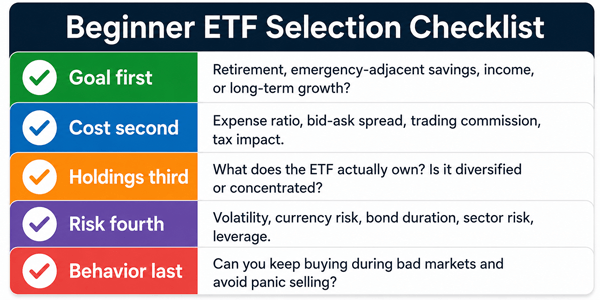
Figure 3: A practical beginner checklist before buying an ETF.
- Start with the goal. Are you investing for retirement, a house deposit in ten years, income, education, or general wealth building? The goal decides the time horizon and risk level.
- Choose the asset class. Decide whether you need stocks, bonds, cash-like exposure, commodities, real estate, or a mix.
- Prefer broad before narrow. For beginners, broad market ETFs are usually more suitable than trendy sector or thematic ETFs.
- Compare expense ratios. For similar index ETFs, lower ongoing cost is usually a major advantage.
- Check the index or strategy. Read what the ETF tracks. “Large cap,” “quality,” “growth,” “value,” “high dividend,” and “covered call” are very different strategies.
- Look at holdings. Review the top 10 holdings, sector weights, country exposure, and number of holdings.
- Check assets and trading volume. Very small or thinly traded ETFs may have wider spreads or closure risk.
- Review performance correctly. Do not focus only on one-year returns. Look at long-term behavior, drawdowns, and whether the ETF did what it was supposed to do.
- Read the official documents. The prospectus or factsheet explains objectives, risks, costs, index methodology, and distributions.
- Use proper order habits. Many beginners use limit orders, avoid the first and last minutes of trading, and avoid buying during extreme market stress unless they understand spreads.
12. ETF Research Checklist
| Question | Good sign | Warning sign |
|---|---|---|
| Can I explain what this ETF owns? | Yes, in one or two sentences. | The strategy sounds complex or vague. |
| Is it diversified? | Hundreds or thousands of holdings for a core ETF. | Heavy concentration in a few names. |
| Is the cost reasonable? | Low expense ratio compared with peers. | High fee without a clear reason. |
| Is it liquid enough? | Tight bid-ask spread and meaningful assets. | Wide spreads, low assets, low volume. |
| Does it match my goal? | Time horizon and risk fit the objective. | Bought because it was trending online. |
| Do I understand the risk? | Clear market, sector, bond, currency, or tax risk. | Uses leverage, inverse exposure, or derivatives I cannot explain. |
| Would I hold it in a downturn? | Yes, because it fits the plan. | No, because I only liked recent returns. |
13. Common ETF Mistakes Beginners Should Avoid
- Buying an ETF only because it appears in a “best ETFs” list.
- Confusing low price per share with cheap valuation. A $20 ETF is not automatically cheaper than a $400 ETF.
- Ignoring the expense ratio because the fee feels small.
- Owning five ETFs that all hold the same large technology stocks and thinking the portfolio is diversified.
- Chasing dividend yield without checking payout quality, sector exposure, and total return.
- Using leveraged or inverse ETFs for long-term investing without understanding daily reset risk.
- Trading too often. ETFs make trading easy, but easy trading can create bad behavior.
- Not checking tax treatment before buying income, commodity, or international ETFs.
- Panic selling during normal market declines.
- Following influencers instead of reading the official fund factsheet and prospectus.
14. Practical Comparison: Broad ETF vs Dividend ETF vs Sector ETF
| Factor | Broad market ETF | Dividend ETF | Sector/thematic ETF |
|---|---|---|---|
| Main goal | Diversified market exposure. | Income tilt and dividend-focused stocks. | Targeted bet on one area. |
| Beginner suitability | Often high for core portfolio use. | Moderate, depending on strategy. | Usually better as small satellite position. |
| Diversification | Usually strong. | Can be moderate; sector bias possible. | Often weak or concentrated. |
| Cost | Often very low. | Low to medium. | Can be medium to high. |
| Risk | Market risk. | Dividend cuts, value traps, sector concentration. | Theme may disappoint or become overpriced. |
| Best use | Long-term core holding. | Income or value tilt. | Specific view with controlled position size. |
15. ETF vs Mutual Fund: Which Is Better for Beginners?
Neither is automatically better. ETFs are often attractive for low-cost investing, tax-efficient investing, and flexible trading. Mutual funds can be convenient for automatic investing, fractional purchases, and investors who do not want to think about intraday prices. Some brokerages now allow recurring ETF purchases and fractional ETF shares, which reduces this difference.
| Choose an ETF when... | Choose a mutual fund when... |
|---|---|
| You want intraday trading and limit orders. | You prefer once-a-day pricing and automatic investment plans. |
| You want access to low-cost index ETFs. | Your retirement plan offers excellent low-cost mutual funds. |
| You care about potential tax efficiency in taxable accounts. | You invest only through a plan where mutual funds are the main option. |
| You are comfortable using a brokerage platform. | You want a simpler set-it-and-forget-it fund platform. |
The practical answer: Choose the wrapper that helps you invest consistently at low cost with a strategy you understand.
16. How Much Money Do You Need to Start ETF Investing?
The minimum depends on your brokerage and whether fractional ETF shares are available. In many modern brokerage accounts, beginners can start with a small amount. However, the better question is not “Can I start?” but “Should this money be invested?”
Before investing, many people first build an emergency fund, pay down high-interest debt, understand their cash flow, and define a time horizon. Money needed in the next few months generally does not belong in a volatile stock ETF.
16.1 Beginner sequence
- Build basic financial safety: emergency savings and manageable debt.
- Decide what the money is for and when you may need it.
- Open a reputable brokerage or retirement account suitable for your country.
- Choose a simple ETF allocation.
- Invest regularly if your cash flow allows.
- Review periodically, not daily.
17. Should Beginners Use Dollar-Cost Averaging?
Dollar-cost averaging means investing a fixed amount at regular intervals, such as every month. It can help beginners reduce the emotional pressure of choosing the “perfect” day to invest. It does not guarantee better returns than investing a lump sum, but it can create discipline and make market volatility feel less scary.
| Method | Best for | Potential drawback |
|---|---|---|
| Lump sum | Investor already has money and long-term plan. | Emotionally difficult if market falls soon after. |
| Dollar-cost averaging | New investors contributing from salary. | May underperform lump sum in rising markets. |
| Hybrid | Investor wants to reduce regret and still get invested. | Requires a written schedule to avoid endless delays. |
18. People's Real-World ETF Experiences: What Patterns Show Up Often
Across beginner investor communities, advisors, and long-term investing discussions, several common experiences repeat. These are not guarantees, but they are useful behavioral lessons.
- Many beginners feel more confident with one broad ETF than with a list of individual stocks they do not fully understand.
- People often overcomplicate portfolios early, then later simplify into fewer, broader, cheaper ETFs.
- The hardest part is usually not choosing the ETF. It is continuing to invest when markets fall.
- Investors who chase last year's hottest ETF often learn that high past performance can reverse quickly.
- Fees feel tiny at first, but long-term investors become more cost-aware as balances grow.
- Tax surprises often happen when investors buy income-heavy, commodity, or international funds without checking details first.
19. FAQ: Beginner ETF Questions
19.1 Are ETFs safe?
ETFs are regulated investment products, but they are not risk-free. Safety depends on what the ETF owns. A Treasury bill ETF is very different from a leveraged technology ETF.
19.2 Can I lose money in an ETF?
Yes. If the assets inside the ETF fall in value, the ETF price can fall too. You can lose money, including principal.
19.3 Do ETFs pay dividends?
Some do. Stock ETFs may distribute dividends, bond ETFs may distribute interest, and some ETFs do not pay much income. Check the distribution policy.
19.4 Is an ETF better than a savings account?
They serve different purposes. A savings account is for stability and short-term needs. ETFs are investments and can go down in value.
19.5 How many ETFs should a beginner own?
Often fewer than people think. A broad stock ETF plus a bond ETF can be more understandable than ten overlapping funds.
19.6 What is the best ETF for beginners?
There is no single best ETF for everyone. Beginners often start research with broad, low-cost, diversified index ETFs that match their country, account type, and goal.
19.7 What is an ETF expense ratio?
It is the annual operating cost of the fund, expressed as a percentage of assets. A 0.10% expense ratio costs about $10 per year on $10,000 before other factors.
19.8 What is a leveraged ETF?
A leveraged ETF tries to multiply daily returns, such as 2x or 3x. These are complex and usually not appropriate as simple long-term beginner holdings.
19.9 Can ETFs be used for retirement?
Yes, many retirement portfolios use ETFs for stocks, bonds, and diversification. The right allocation depends on time horizon, risk tolerance, and tax/account rules.
19.10 Should I buy ETFs every month?
Regular investing can build discipline, but only invest money you can leave invested for an appropriate period and after handling basic financial priorities.
20. Beginner-Friendly ETF Glossary
| Term | Meaning |
|---|---|
| ETF | Exchange-traded fund; a basket of assets that trades on an exchange. |
| Ticker | Short symbol used to identify an ETF or stock. |
| Expense ratio | Annual fund operating cost as a percentage of assets. |
| NAV | Net asset value; approximate per-share value of the fund holdings. |
| Bid-ask spread | Difference between buyer bid and seller ask price. |
| Index | A rule-based basket used as a benchmark, such as a broad stock market index. |
| Tracking difference | How much the ETF's return differs from the index or target. |
| Dividend yield | Income paid over a period divided by price; high yield is not automatically good. |
| Duration | Bond sensitivity to interest-rate changes. |
| AUM | Assets under management; the size of the fund. |
21. Final Takeaway
An ETF is one of the simplest tools for building a diversified investment portfolio, but it should still be used thoughtfully. The beginner goal is not to find the flashiest ETF. The goal is to understand what you own, keep costs reasonable, diversify properly, manage taxes where possible, and behave consistently through market cycles.
A strong ETF decision can usually pass this test: “I know what this fund owns, why I own it, what it costs, what could go wrong, and how long I plan to hold it.” If you cannot answer those points, keep researching before buying.
Sources Consulted and Checked
The following authoritative sources were consulted and checked while preparing this article to support accuracy, clarity, and responsible presentation of the information.
- Investor.gov, “Exchange-Traded Funds (ETFs)” and related Investor Bulletins, including ETF risks, costs, and prospectus guidance.
- U.S. Securities and Exchange Commission, ETF investor education materials and EDGAR fund disclosures.
- FINRA, “Exchange-Traded Funds and Products,” including reminders about fees, expenses, risks, and fund comparison tools.
- Vanguard investor education, ETF basics and ETF vs mutual fund comparisons, including trading and tax-efficiency explanations.
- Fidelity learning materials on ETFs and ETF tax efficiency.
- Investment Company Institute (ICI), U.S. ETF market data and ETF asset statistics, including April 2026 ETF asset highlights.
Reader Advice
This article is provided solely for educational and general informational purposes. It does not constitute personal financial, investment, legal, accounting, or tax advice, and it is not a recommendation or solicitation to buy, sell, or hold any ETF or other security. Investments involve risk, including the possible loss of principal, and past performance does not guarantee future results. Before making any financial decision, consider your objectives, time horizon, financial circumstances, risk tolerance, country of residence, account type, and applicable tax rules.
Rules, fees, product features, market conditions, and regulatory requirements can change, and they may differ by jurisdiction and provider. Verify current facts, figures, fund documents, and legal or tax requirements through official sources, including the ETF issuer, regulator, brokerage, prospectus, and qualified professionals. Seek advice from an appropriately licensed financial adviser, tax professional, or legal professional when guidance tailored to your circumstances is needed.