How Do ETFs Work? A Simple Guide for New Investors
An ETF, short for exchange-traded fund, is one of the simplest ways to invest in many stocks, bonds, or other assets through a single trade. Instead of choosing one company and hoping it performs well, an ETF lets you buy a small slice of a whole basket. That basket might track the S&P 500, the total U.S. stock market, global stocks, bonds, gold, dividend companies, or a specific investing strategy.
For a new investor, the biggest attraction is convenience. You can start with one broad, low-cost ETF and instantly own hundreds or even thousands of securities. That does not make ETFs risk-free. The price can fall, some ETFs are expensive or narrow, and trading at the wrong time can cost money. But when used carefully, ETFs can be a practical building block for long-term investing.
This guide explains ETFs in plain English: what they are, how they work behind the scenes, what beginners should check before buying, common mistakes to avoid, and how to use ETFs in a simple portfolio.
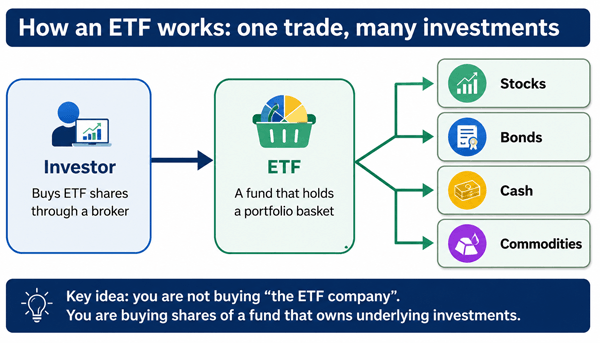
Figure 1: An ETF turns one purchase into exposure to a portfolio basket.
1. Quick answer: what is an ETF?
An ETF is a pooled investment fund that trades on a stock exchange. Many investors put money into the fund, and the fund owns a portfolio of assets such as stocks, bonds, short-term instruments, commodities, or a mix. You buy and sell ETF shares through a brokerage account, similar to the way you buy and sell a stock.
The important beginner point is this: an ETF is a container. The ETF itself is not automatically safe or risky. Its risk depends on what is inside the container. A broad total-market stock ETF behaves very differently from a leveraged technology ETF, a long-term bond ETF, or a single-country emerging market ETF.
Simple definition
An ETF is like a shopping basket of investments that trades like a stock. You buy one share of the basket, and that share gives you exposure to everything the basket holds.
2. Why ETFs became popular
ETFs have grown because they solve several common investor problems: they are easy to trade, usually transparent, often low-cost, and available across many asset classes. According to ETFGI, global ETF assets reached a record $21.91 trillion at the end of April 2026, showing how widely these funds are now used by both institutions and everyday investors. ICI reported that U.S. ETF assets alone were $14.80 trillion in April 2026.
Popularity does not mean every ETF is a good investment. It means the ETF structure has become a common vehicle. The job of a beginner is not to buy an ETF because it is trending. The job is to choose an ETF that fits a goal, has reasonable costs, and is understandable enough to hold through normal market ups and downs.
3. How an ETF works step by step
1. The ETF has an objective
Every ETF starts with a goal. It may try to track an index, such as the S&P 500, or follow an active manager’s strategy. The objective tells you what the fund is trying to own and why.
2. The ETF owns a portfolio
The fund uses investor money to hold assets. A stock ETF may own shares of hundreds of companies. A bond ETF may own government, corporate, municipal, or international bonds. A commodity ETF may gain exposure to a commodity directly or through other instruments.
3. Shares trade on an exchange
Investors buy and sell ETF shares during market hours. The ETF’s market price can move throughout the day as buyers and sellers trade.
4. The ETF has a net asset value
The net asset value, or NAV, is the estimated value of the fund’s underlying holdings per share. The trading price normally stays close to NAV, but it can trade slightly above or below it.
5. Authorized participants help keep price and value close
Large institutions called authorized participants can create or redeem ETF shares in big blocks. This creation/redemption process helps keep the ETF’s market price near the value of its underlying basket. New investors do not need to manage this process, but it explains why ETFs generally track their portfolios closely.
6. You receive returns from price changes and distributions
If the ETF’s holdings rise, the ETF price may rise. If holdings pay dividends or interest, the ETF may pass those distributions to shareholders. Returns are never guaranteed.
4. ETF vs stock vs mutual fund vs index fund
Beginners often mix these terms together. The easiest way to separate them is to ask two questions: what does it own, and how does it trade?
| Investment | What you own | How it trades | Beginner takeaway |
|---|---|---|---|
| Individual stock | Shares of one company | Throughout the day on an exchange | Higher company-specific risk. Good companies can still be bad investments at the wrong price. |
| ETF | Shares of a fund that owns a basket | Throughout the day on an exchange | Useful for diversified, low-cost exposure. Still depends on what the basket owns. |
| Mutual fund | Shares/units of a pooled fund | Usually once per day at end-of-day NAV | Can be simple for automatic investing. May have minimums, different fees, or tax differences. |
| Index fund | A fund that tracks an index | Can be an ETF or a mutual fund | Index fund describes strategy, not trading format. Many ETFs are index funds, but not all ETFs are passive. |
A common beginner mistake is asking, “Are ETFs better than mutual funds?” The better question is, “Which fund is cheaper, more convenient, more tax-efficient for my account, and easier for me to use correctly?” In many brokerage accounts, a broad ETF is convenient. In some retirement plans, an index mutual fund may be just as good or better because it allows automatic investing and fractional purchases.
5. The main types of ETFs beginners will see
| ETF type | What it usually holds | Common use | Beginner caution |
|---|---|---|---|
| Broad market stock ETF | Hundreds or thousands of stocks | Core long-term growth holding | Can still fall sharply in a bear market. |
| S&P 500 ETF | Large U.S. companies | Simple U.S. large-cap exposure | Not the entire market; heavily influenced by the biggest companies. |
| Total international stock ETF | Non-U.S. companies | Global diversification | Currency and country risks can affect returns. |
| Bond ETF | Government or corporate bonds | Income, stability, diversification | Bond prices can fall when rates rise; credit risk varies. |
| Dividend ETF | Companies selected for dividends | Income-focused stock exposure | High dividend yield can signal risk, not quality. |
| Sector ETF | One industry such as technology or healthcare | Targeted exposure or tactical tilt | Less diversified; can be volatile. |
| Thematic ETF | Trends such as AI, clean energy, robotics | Speculative growth theme | Often launched after a theme is already popular. |
| Active ETF | Manager selects holdings actively | Try to outperform or manage risk | Higher fees and manager risk; success is not guaranteed. |
| Leveraged/inverse ETF | Derivatives to magnify or reverse daily moves | Short-term trading, not normal investing | Usually unsuitable for beginners and long-term holding. |
6. A practical example: what happens when you buy an ETF?
Imagine you have $1,000 and buy a broad-market ETF at $100 per share. You receive 10 ETF shares. The ETF itself may hold 500 or 3,000 companies. You do not directly own each company share in your name; you own ETF shares, and the ETF owns the underlying portfolio.
If the ETF’s holdings rise by about 8% over the year, your ETF shares may be worth roughly $1,080 before fees, taxes, and tracking differences. If the ETF pays dividends, you may receive cash distributions or reinvest them, depending on your account settings. If the market drops 20%, your $1,000 could become about $800. Diversification reduces single-company risk, but it does not remove market risk.
Reality check from investor experience
Many beginners say ETFs feel boring compared with picking stocks. That is often the point. A broad ETF strategy works best when it is repeatable, low-cost, and emotionally manageable. The excitement should come from reaching goals, not from constant trading.
7. ETF costs: what you really pay
ETFs are often described as low-cost, but “low-cost” does not mean “free.” The real cost includes visible and invisible pieces. A beginner should know these before comparing funds.
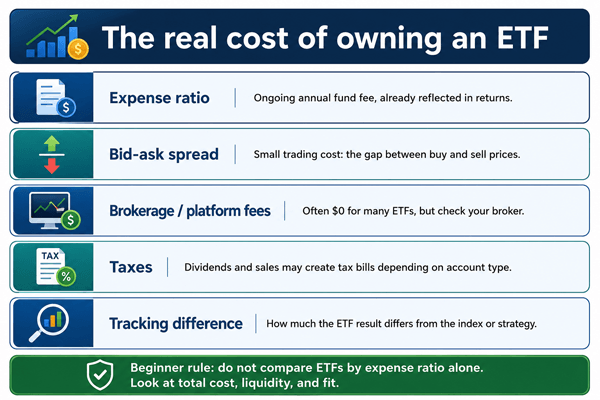
Figure 2: ETF cost is more than the headline expense ratio.
| Cost | What it means | Why it matters |
|---|---|---|
| Expense ratio | Annual operating cost expressed as a percentage of fund assets | Lower costs leave more return for investors, especially over long periods. |
| Bid-ask spread | Difference between the price buyers bid and sellers ask | A wider spread is an extra trading cost, especially for frequent traders. |
| Premium/discount to NAV | ETF price above or below the value of holdings | Usually small for liquid ETFs, but can widen in stressed markets or thinly traded funds. |
| Broker commission/platform fee | Fee charged by the broker or investing platform | Many brokers offer commission-free ETF trades, but investors should confirm. |
| Taxes | Tax on dividends, interest, and capital gains depending on account and country | After-tax return matters more than pre-tax return. |
| Tracking difference | Gap between ETF performance and benchmark performance | Shows how well the fund delivered what it promised after costs and implementation. |
Example: Suppose ETF A charges 0.03% per year and ETF B charges 0.45% per year. On $10,000, the annual fund-cost difference is about $42. That sounds small in year one, but over decades and larger balances, recurring costs compound. However, do not choose based on expense ratio alone. A fund with a low fee but poor liquidity, a narrow theme, or a risky strategy may be a worse fit than a slightly more expensive but better-designed ETF.
8. How to choose an ETF as a beginner
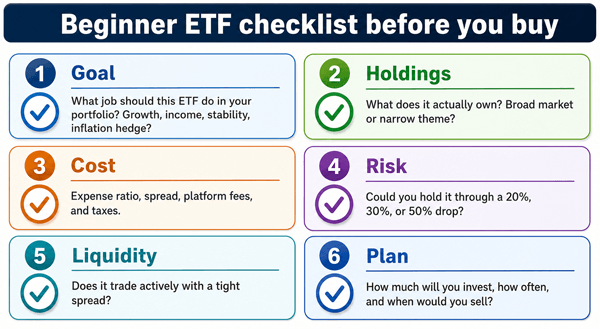
Figure 3: Use this checklist before buying an ETF.
8.1 Start with the goal, not the ticker
Do you want long-term growth, income, capital preservation, inflation protection, or diversification? A ticker symbol is not a plan. Decide what role the ETF should play before you compare products.
8.2 Read the fund objective in one sentence
If you cannot explain the ETF in one sentence, you probably do not understand it well enough. “This ETF tracks the total U.S. stock market” is clear. “This ETF uses a covered-call, buffered, option-linked strategy on a concentrated index” may require more study.
8.3 Look inside the holdings
Do not rely on the fund name. A “technology” ETF may be concentrated in a handful of mega-cap stocks. A “dividend” ETF may hold companies from very different sectors. Check the top holdings, number of holdings, country exposure, sector exposure, and weighting method.
8.4 Compare costs and liquidity
Review the expense ratio, bid-ask spread, average trading volume, and assets under management. Large, liquid ETFs often trade more efficiently, but size alone is not a guarantee of quality.
8.5 Check performance carefully
Past performance is useful context but not a promise. Compare the ETF with the right benchmark and look at multiple periods, not just the last 12 months. A fund that recently performed well may simply have benefited from a temporary trend.
8.6 Know the risks you are accepting
Every ETF has risks: market risk, interest-rate risk, credit risk, currency risk, concentration risk, liquidity risk, tracking risk, and tax risk. The fund prospectus and fact sheet usually list these risks.
8.7 Decide your buying method
Some investors invest a lump sum. Others use dollar-cost averaging by investing a fixed amount regularly. The best method is the one that matches your cash flow, risk tolerance, and ability to stay disciplined.
9. Simple ETF portfolio examples
| Investor profile | Possible ETF structure | Why it may fit | Main risk |
|---|---|---|---|
| Beginner with long time horizon | One broad global stock ETF, or U.S. total market + international stock ETF | Simple, diversified, easy to maintain | Can fall heavily during stock bear markets. |
| Balanced long-term investor | Stock ETF(s) + bond ETF(s), such as 80/20 or 60/40 | Adds stabilizing assets while keeping growth potential | Bond ETFs can fall too, especially when rates rise. |
| Income-focused investor | Dividend ETF + bond ETF + broad stock ETF | May produce more cash flow | High yield can come with credit or equity risk. |
| Hands-off retirement saver | Target-date ETF/fund if available, or a simple stock/bond mix | Automatically or manually aligns risk with time horizon | May not match personal tax or risk needs. |
| Speculative satellite investor | Core broad ETFs plus small allocation to sector/thematic ETFs | Allows limited expression of views without risking the whole portfolio | Themes can underperform for years or collapse after hype. |
A practical approach many experienced investors use is the core-and-satellite method. The “core” is a large part of the portfolio in broad, low-cost ETFs. The “satellite” is a small part used for higher-conviction ideas such as a sector, region, factor, or theme. This reduces the chance that a trendy idea damages the entire plan.
10. ETF benefits
10.1 Diversification in one trade
A broad ETF can spread money across many securities. This reduces the damage from one company failing, although it does not prevent market losses.
10.2 Low cost
Many index ETFs charge very low expense ratios. Lower costs are one of the few variables investors can control.
10.3 Transparency
Most ETFs disclose holdings regularly, often daily. This helps investors understand what they own.
10.4 Liquidity and flexibility
ETFs trade during market hours, which gives investors control over trading price and timing.
10.5 Tax efficiency in some markets
In the U.S., many ETFs can be tax-efficient because of their structure, but tax treatment depends on the ETF type, account, and investor jurisdiction.
10.6 Access
ETFs make it easier to access markets that may be difficult to buy directly, such as broad bond markets, international stocks, commodities, or specific strategies.
11. ETF risks beginners should not ignore
| Risk | What it looks like in real life | How to reduce avoidable mistakes |
|---|---|---|
| Market risk | A stock ETF falls when the stock market falls | Match ETF risk to your time horizon; keep emergency cash outside the market. |
| Concentration risk | A fund owns only one sector, theme, or country | Use narrow ETFs as small satellites, not the whole portfolio. |
| Liquidity risk | ETF trades with wide spreads or limited volume | Prefer liquid funds; use limit orders; avoid trading at market open/close if spreads are unstable. |
| Interest-rate risk | Bond ETF price falls when rates rise | Understand bond duration; choose duration that fits your goal. |
| Credit risk | Bond ETF holds lower-quality borrowers that may default | Check credit quality, yield source, and holdings. |
| Currency risk | International ETF moves due to exchange rates | Know whether the ETF is hedged or unhedged. |
| Tracking risk | ETF does not match its benchmark closely | Review tracking history and methodology. |
| Product complexity | Leveraged, inverse, or derivative-based ETF behaves unexpectedly | Avoid products you cannot explain simply. |
12. How to buy an ETF: beginner process
12.1. Open a suitable brokerage or investment account
Choose an account based on fees, available ETFs, tax features, user experience, customer support, and regulation. In some countries, tax-advantaged retirement accounts may be better for long-term investing.
12.2. Search by ticker or fund name
Use the ETF ticker only after you confirm the fund provider, objective, and exchange. Some tickers are similar, and some ETFs have multiple share classes or listings.
12.3. Review the ETF fact sheet and prospectus
Check objective, index or strategy, expense ratio, holdings, risks, distribution policy, assets, and performance. A fact sheet is quick; the prospectus is more detailed.
12.4. Choose order type
For many beginners, a limit order is safer than a market order because it sets the maximum price you are willing to pay or the minimum price you are willing to accept when selling.
12.5. Decide amount and frequency
You might invest a lump sum, monthly amount, or periodic contribution. The key is consistency and avoiding emotional buying and selling.
12.6. Reinvest or take distributions
If you do not need income, reinvesting dividends and interest can help compounding. If you need cash flow, taking distributions may fit your plan.
12.7. Review periodically, not obsessively
A quarterly or annual review is enough for many long-term investors. Constant checking can encourage unnecessary trades.
13. Practical trading tips for ETFs
| Tip | Why it helps |
|---|---|
| Use limit orders | Helps avoid paying more than intended in fast or thin markets. |
| Avoid trading immediately after the market opens | Spreads can be wider while prices settle. |
| Avoid trading near the close if you are inexperienced | Markets can move quickly and liquidity can change. |
| Check the bid-ask spread before placing an order | A wide spread is a real cost. |
| Do not chase the day’s top-performing ETF | Short-term winners are often volatile or theme-driven. |
| Keep records | Track why you bought the ETF, not just the price. |
14. Common ETF mistakes beginners make
14.1 Buying a fund because the name sounds good
ETF names are marketing labels. Always inspect holdings and methodology.
14.2 Confusing diversification with safety
A broad stock ETF is diversified, but it can still drop sharply. Diversification spreads risk; it does not eliminate risk.
14.3 Owning too many overlapping ETFs
Buying five ETFs that all hold the same large technology stocks may not add diversification. It may simply duplicate exposure.
14.4 Ignoring taxes
Tax treatment can differ for stock ETFs, bond ETFs, commodity ETFs, international ETFs, and account types. Taxes can change the real return.
14.5 Using leveraged or inverse ETFs as long-term investments
These products are usually designed for short-term trading and can behave very differently over longer periods.
14.6 Selling during normal volatility
A good ETF cannot help if the investor abandons the plan every time markets fall. Plan for volatility before it arrives.
14.7 Focusing only on yield
High distribution yield may come from riskier bonds, covered-call strategies, falling prices, or return of capital. Understand the source of income.
15. ETF tax basics in plain English
Tax rules differ by country, account type, ETF structure, and investor situation, so readers should verify local rules or speak with a qualified tax professional. In general, ETF investors may face taxes on dividends, interest distributions, capital gains when selling, foreign withholding taxes, or special treatment for commodity and derivative-based funds.
The practical beginner lesson is simple: compare after-tax outcomes, not just headline returns. A high-yield bond ETF in a taxable account may create more taxable income than expected. An international ETF may have withholding tax considerations. A retirement account may change the calculation entirely.
16. Are ETFs good for beginners?
ETFs can be excellent for beginners when they are broad, low-cost, understandable, and used as part of a long-term plan. They can be poor choices when they are narrow, expensive, leveraged, illiquid, or bought because of hype.
| Good beginner use | Riskier beginner use |
|---|---|
| Broad stock market ETF for long-term growth | Single-sector ETF bought after a big rally |
| Bond ETF chosen for a known role in the portfolio | Long-duration bond ETF bought without understanding rate risk |
| Low-cost index ETF held consistently | Leveraged ETF held for months or years |
| Simple two- or three-fund ETF portfolio | Ten overlapping ETFs with no clear plan |
| Dollar-cost averaging into diversified ETFs | Frequent trading based on headlines |
17. Mini glossary for new investors
| Term | Simple meaning |
|---|---|
| Expense ratio | The annual fund fee, shown as a percentage. |
| NAV | Net asset value: estimated value of the ETF’s holdings per share. |
| Bid price | Price buyers are currently willing to pay. |
| Ask price | Price sellers are currently asking. |
| Spread | The gap between bid and ask. |
| Index | A rules-based list of securities used as a benchmark. |
| Tracking difference | How much ETF return differs from its benchmark. |
| AUM | Assets under management: total money invested in the fund. |
| Distribution | Cash paid out by the ETF from dividends, interest, or other income. |
| Rebalancing | Adjusting holdings back to target percentages. |
18. FAQ: How do ETFs work?
18.1 Can I lose money in an ETF?
Yes. ETFs can lose value when their underlying assets fall. A diversified ETF can still decline during a broad market selloff.
18.2 Do ETFs pay dividends?
Many stock and bond ETFs pay distributions. The amount and schedule depend on the ETF’s holdings and policy.
18.3 How much money do I need to start investing in ETFs?
It depends on the broker and ETF price. Some platforms allow fractional ETF shares, while others require buying at least one full share.
18.4 Are ETFs safer than stocks?
A broad ETF is usually less risky than one individual stock because it spreads company-specific risk. But it is not risk-free.
18.5 What is the best ETF for beginners?
There is no universal best ETF. Many beginners start research with broad, low-cost stock and bond ETFs because they are easier to understand and diversify.
18.6 Are ETFs better than mutual funds?
Sometimes, but not always. ETFs often offer intraday trading, transparency, and low costs. Mutual funds may be better for automatic investing, retirement plans, or specific strategies.
18.7 Should I buy ETFs when the market is down?
Market declines can create long-term opportunities, but only if the ETF fits your plan and you can tolerate further losses. Avoid trying to perfectly time the bottom.
18.8 How many ETFs should a beginner own?
Many beginners can build a diversified portfolio with one to three broad ETFs. More ETFs do not automatically mean better diversification.
18.9 What is a leveraged ETF?
A leveraged ETF tries to deliver a multiple of daily index returns, such as 2x or 3x. These are complex, high-risk products and are generally not beginner-friendly.
18.10 Can ETFs be used for retirement investing?
Yes, ETFs can be used in many retirement accounts, depending on the platform and country. The right mix depends on goals and risk tolerance.
19. Final beginner checklist
- I know what the ETF owns.
- I understand the ETF objective and main risks.
- The expense ratio and spread are reasonable.
- The ETF fits a specific role in my portfolio.
- I am not buying only because of recent performance or hype.
- I know whether I plan to hold, add regularly, rebalance, or sell.
- I understand possible tax consequences or will check them before investing.
20. Bottom line
ETFs work by pooling investor money into a fund that owns a basket of assets, then letting investors buy and sell shares of that fund on an exchange. For beginners, the best use of ETFs is usually simple: choose broad, low-cost, understandable funds that match your goals, then hold them with discipline. The worst use is also common: chasing hot themes, ignoring risk, and treating ETFs like lottery tickets.
A good ETF strategy should be boring enough to follow and strong enough to survive real markets. Before buying, understand the fund, compare total costs, check the holdings, and decide how it fits into your overall financial plan.
Reader Advice
This article is provided solely for educational and general informational purposes. It does not constitute personalized investment, financial, tax, accounting, or legal advice, and it should not be treated as a recommendation to buy, sell, or hold any ETF or other security. Investing involves risk, including the possible loss of principal. Before making a decision, readers should consider their objectives, time horizon, financial circumstances, risk tolerance, tax position, and applicable laws and regulations, and should consult appropriately qualified professionals where necessary.
ETF features, fees, holdings, market data, tax treatment, regulations, platform terms, and other facts can change over time and may differ by country, account type, broker, and investor. Readers should therefore verify current facts, figures, product documents, and rules through official regulatory, fund-provider, tax-authority, and brokerage sources before acting.
Sources Consulted and Checked
The following sources were consulted and checked while preparing this article to support factual accuracy and reader understanding.
- SEC Investor.gov / Office of Investor Education and Advocacy: ETF investor bulletin and ETF basics.
- FINRA: Exchange-traded funds and products; ETF vs mutual fund investor education.
- Investment Company Institute (ICI): April 2026 U.S. ETF asset data and ETF structure basics.
- ETFGI: Global ETF asset and inflow data through April 2026.
- Vanguard investor education: ETF costs, expense ratios, bid-ask spreads, and ETF selection factors.
- Morningstar ETF research: active ETF growth and ETF market trends.