Can ETFs Make You Rich? A Realistic Look at Long-Term Wealth
1. Can ETFs Make You Rich? The Honest Answer
Yes, ETFs can help you build serious long-term wealth. But they usually do it slowly, quietly, and through discipline - not by making you rich overnight.
An ETF, or exchange-traded fund, is a simple investment product that lets you buy a basket of investments in one trade. One ETF may hold hundreds of stocks, a group of bonds, real estate companies, dividend-paying companies, or even a broad global market index. That is why many beginners use ETFs as a practical first step into investing.
The realistic answer is this: ETFs can make you wealthier if you use them as part of a long-term plan, invest regularly, keep costs low, diversify properly, and avoid emotional buying and selling. They are not magic. They do not remove market risk. They do not guarantee profit. But for ordinary people who do not want to pick individual stocks, low-cost diversified ETFs can be one of the most practical wealth-building tools available.
This article explains ETFs from zero. You will learn what they are, how they work, how they can grow money over time, what beginners should know, which mistakes to avoid, and how to think about ETF investing in a realistic way.
2. What Is an ETF in Simple Words?
An ETF is like a shopping basket of investments. Instead of buying one company, you buy one fund that owns many companies or assets. The ETF trades on a stock exchange, so you can buy and sell it during market hours through a brokerage account, similar to a stock.
For example, an S&P 500 ETF usually aims to track the S&P 500 index, which represents large U.S. companies. A total U.S. stock market ETF may own thousands of U.S. stocks. A global stock ETF may own companies from many countries. A bond ETF may own government or corporate bonds.
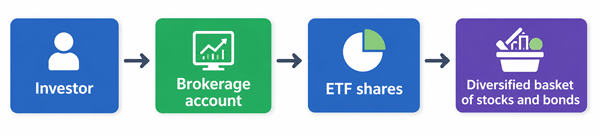
Figure 1. A simplified view of how an investor accesses a diversified ETF through a brokerage account.
| ETF type | What it usually holds | Beginner-friendly use | Main risk |
|---|---|---|---|
| Broad stock market ETF | Hundreds or thousands of stocks | Long-term growth | Market downturns can reduce value |
| S&P 500 ETF | Large U.S. companies | Simple U.S. market exposure | Concentrated in large U.S. companies |
| Total world stock ETF | Stocks from multiple countries | Global diversification | Currency and global market risk |
| Bond ETF | Government or corporate bonds | Stability and income | Interest-rate and credit risk |
| Dividend ETF | Dividend-paying companies | Income-focused investing | Dividend cuts and sector concentration |
| Sector ETF | One industry, such as technology or healthcare | Targeted exposure | Higher concentration risk |
| Leveraged or inverse ETF | Derivatives designed for daily multiples or opposite movement | Usually not suitable for beginners | Can lose money quickly; long-term results may differ sharply from expectations |
3. How ETFs Actually Work
When you buy an ETF, you are not usually buying the index itself. You are buying shares of a fund designed to track a specific index, theme, asset class, or strategy. The ETF provider manages the fund, charges an annual expense ratio, and publishes information about the ETF's holdings, objective, fees, and risks.
Most beginner-friendly ETFs are index ETFs. They do not try to guess which stock will win next month. They simply try to follow a market index as closely as possible. This is called passive investing. The goal is not to beat the market; the goal is to capture the market return at a low cost.
| Term | Plain-English meaning | Why it matters |
|---|---|---|
| Expense ratio | The yearly fund cost, shown as a percentage | Lower costs leave more return for you over time |
| Index | A rule-based list of investments the ETF tracks | Tells you what you really own |
| Holdings | The assets inside the ETF | Shows diversification and concentration |
| Dividend yield | Income paid by the ETF relative to price | Useful, but high yield is not always safer |
| Tracking error | Difference between ETF return and index return | Lower is generally better for index ETFs |
| Bid-ask spread | Difference between buying and selling price | A hidden trading cost, especially in thinly traded ETFs |
| Assets under management | Total money invested in the ETF | Very small ETFs may have closure or liquidity risk |
4. Can ETFs Really Make You Rich?
ETFs can help create wealth because they give you access to ownership. When you buy a broad stock ETF, you may own tiny pieces of many businesses. Over decades, successful businesses can grow earnings, pay dividends, reinvest profits, and increase in value. Investors who stay invested may participate in that growth.
The key word is decades. ETFs are most powerful when they are paired with time, regular contributions, reinvested dividends, low fees, and patience. A person who invests consistently for 25 or 30 years may end up with a very different result from a person who invests once, panics during a market decline, and sells.
Hypothetical example only. Assumes the monthly investments shown below for 30 years at a 7% annualized return. Actual returns are not guaranteed and may be negative in some years.
| Monthly investment | Years | Hypothetical annual return | Approximate ending value | What this teaches |
|---|---|---|---|---|
| $100 | 30 | 7% | $122,700 | Small amounts can matter when time is long |
| $300 | 30 | 7% | $368,000 | Consistency can do more than stock picking |
| $500 | 30 | 7% | $613,500 | Higher savings rate speeds wealth building |
| $1,000 | 30 | 7% | $1.23 million | Large wealth is possible, but mostly from time and contributions |
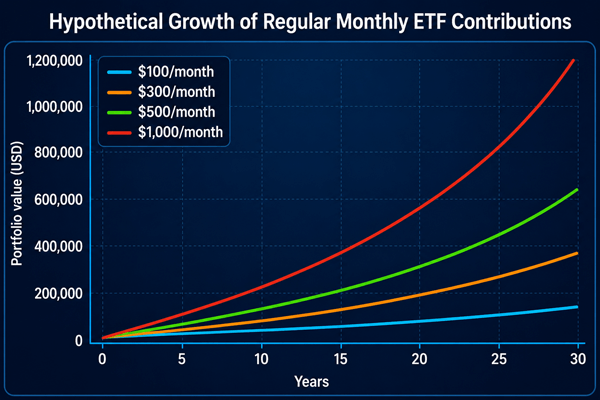
Figure 2. Hypothetical growth at a 7% annualized return. Actual returns vary and are not guaranteed.
These numbers are not promises. They are math examples. Real markets move up and down. Some decades are excellent. Some are disappointing. The purpose of the example is to show why long-term investors care so much about compounding.
5. The Real Wealth Formula: Contributions + Time + Return - Costs - Bad Behavior
Many beginners ask, 'Which ETF will make me rich?' A better question is, 'What repeatable investment behavior gives me the best chance of building wealth?' The formula is simple:
Long-term ETF wealth = regular contributions + enough time + reasonable market returns - fees - taxes - emotional mistakes
You control some parts of the formula more than others. You cannot control next year's market return. You can control how much you save, whether you diversify, what you pay in fees, whether you chase hype, and whether you sell in panic.
| Factor | You can control it? | Practical action |
|---|---|---|
| Savings rate | Mostly yes | Automate a monthly investment amount you can sustain |
| Time horizon | Mostly yes | Use ETFs for long-term goals, not next month’s rent |
| Market return | No | Do not build a plan that requires perfect returns |
| Fees | Yes | Prefer low-cost ETFs when suitable |
| Taxes | Partly | Use tax-advantaged accounts when available and follow local rules |
| Investor behavior | Yes | Avoid panic selling, hype buying, and overtrading |
6. Why Low-Cost ETFs Are So Popular
Low-cost ETFs are popular because they solve three common beginner problems at once: diversification, cost, and simplicity. Instead of researching 50 individual stocks, a beginner can buy one broad ETF and instantly own many companies. Instead of paying high management fees, many index ETFs charge very low annual expenses. Instead of guessing which fund manager will outperform, the investor accepts the market return.
This does not mean every ETF is good. Some ETFs are expensive, narrow, risky, illiquid, or built for short-term trading. The word ETF only describes the wrapper. The investments inside the wrapper matter much more.
7. ETF vs Stock: Which Is Better for Beginners?
A stock is ownership in one company. An ETF is ownership in a fund that may hold many companies. Beginners often underestimate the risk of one-company investing. A single company can disappoint investors, lose market share, face lawsuits, cut dividends, or even fail. A broad ETF spreads that company-specific risk across many holdings.
Individual stocks can outperform ETFs, but they can also underperform badly. ETFs are not designed to make you look smart at a dinner table. They are designed to give you broad exposure with less need for constant research.
8. ETF vs Mutual Fund: The Practical Difference
ETFs and mutual funds can both provide diversified exposure. The practical difference is how they trade and sometimes how they are taxed and priced. ETFs trade during the day like stocks. Mutual funds usually trade once per day after the market closes. Many ETFs have low minimum investments, while mutual funds may have minimums depending on the provider and account.
For a beginner, the best choice is often the one that helps you invest consistently at low cost without overcomplicating the plan. Some investors prefer ETFs for flexibility and low expenses. Others prefer mutual funds because automatic investing can be simpler at certain brokers.
| Feature | ETF | Mutual fund | Beginner takeaway |
|---|---|---|---|
| Trading | Trades during market hours | Trades once daily at closing NAV | ETFs feel more like stocks |
| Minimum investment | Often price of one share or fractional share if available | May require minimum investment | Depends on broker and fund |
| Automatic investing | Broker-dependent | Often easier | Automation matters more than product label |
| Costs | Many index ETFs are low-cost | Index mutual funds can also be low-cost | Compare expense ratios |
| Tax efficiency | Often tax-efficient, especially index ETFs | Varies by fund structure | Tax rules differ by country/account |
9. How Beginners Can Start Using ETFs Step by Step
- Step 1: Define the goal: Is the money for retirement, a home, education, or general wealth building? ETFs are best for goals with a multi-year or multi-decade horizon. Money needed soon should usually not be exposed heavily to stock market risk.
- Step 2: Build an emergency fund first: Before investing aggressively, many people benefit from keeping cash for emergencies. This prevents them from selling ETFs during a bad market just to cover basic expenses.
- Step 3: Choose the account type: Depending on your country, you may use a taxable brokerage account, retirement account, ISA, IRA, 401(k), Roth IRA, or another tax-advantaged account. The account can matter as much as the ETF because taxes affect long-term returns.
- Step 4: Pick an asset allocation: Asset allocation means deciding how much goes into stocks, bonds, and cash. Younger investors with long horizons may hold more stock ETFs. Investors closer to retirement may prefer more bonds and cash.
- Step 5: Choose simple, broad ETFs: A beginner does not need 15 ETFs. A simple portfolio may include a broad stock ETF and a bond ETF. Some investors use a total world stock ETF plus a bond ETF. Simplicity reduces mistakes.
- Step 6: Automate contributions: A monthly contribution plan helps remove emotion. It also uses dollar-cost averaging, where you buy more shares when prices are lower and fewer when prices are higher.
- Step 7: Rebalance occasionally: If stocks rise a lot, your portfolio may become riskier than planned. Rebalancing means returning to your target mix, such as 80% stocks and 20% bonds.
- Step 8: Review, but do not obsess: Checking prices every hour encourages emotional decisions. A quarterly or semiannual review is enough for many long-term investors.
| Investor profile | Possible ETF approach | Reasonable warning |
|---|---|---|
| 20s or 30s, long horizon | Mostly broad stock ETFs, possibly some bonds | Can tolerate volatility only if income and emergency fund are stable |
| 40s, family obligations | Diversified stock ETFs plus bonds/cash | Avoid taking risk with money needed soon |
| Near retirement | More balanced ETF portfolio with bonds and cash reserves | Sequence-of-return risk becomes important |
| Income-focused investor | Dividend ETF plus bonds, but not only high yield | High yield can signal higher risk |
| Beginner with anxiety | Simpler balanced ETF or target-date style approach | A slightly lower-return plan you can stick with may beat a high-risk plan you abandon |
10. The Hidden Power of Low Fees
Fees look small because they are written as tiny percentages. But over decades, the difference between a 0.03% expense ratio and a 1.00% expense ratio can become meaningful. Fees reduce returns every year, whether the market goes up or down.
Hypothetical illustration only. Assumes $100,000 invested for 30 years with a 7% gross annual return before fund costs. Taxes, trading costs, and real market volatility are not included.
| Cost item | Where it appears | How to reduce it |
|---|---|---|
| Expense ratio | ETF factsheet/prospectus | Compare similar ETFs and prefer lower-cost options when all else is equal |
| Bid-ask spread | Trading screen | Use liquid ETFs and avoid market orders in volatile moments |
| Trading commission | Broker fee schedule | Use commission-free brokers when appropriate |
| Tax drag | Tax return/account statement | Use tax-advantaged accounts and avoid unnecessary selling |
| Adviser/platform fees | Adviser agreement/platform disclosure | Pay only when value is clear and understood |
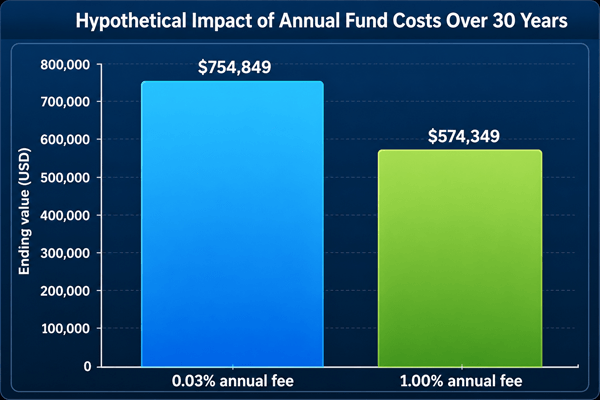
Figure 3. Hypothetical fee impact using a 7% gross annual return before fund costs. Taxes and trading costs are excluded.
11. What Beginners Must Know Before Buying ETFs
11.1 ETFs can lose money
ETFs are investments, not bank deposits. A stock ETF can fall 20%, 30%, or more during a severe bear market. A bond ETF can fall when interest rates rise or credit risk increases. Diversification reduces single-company risk, but it does not remove market risk.
11.2 Not all ETFs are diversified
A total market ETF may be very diversified. A single-sector ETF or single-country ETF may be concentrated. A thematic ETF may sound exciting but may own expensive companies in one narrow trend.
11.3 Leveraged and inverse ETFs are dangerous for long-term beginners
Many leveraged and inverse ETFs are designed to meet daily objectives. Over weeks, months, or years, their results can differ significantly from what a beginner expects. These products are generally trading tools, not simple long-term wealth tools.
11.4 High dividend yield is not free money
A high dividend ETF may look attractive, but dividends can be cut and the share price can fall. Total return matters more than yield alone.
11.5 Past performance does not guarantee future returns
An ETF that performed well in the last five years may simply have benefited from a hot sector or market cycle. Beginners should understand why an ETF performed well before assuming it will continue.
11.6 Currency and country risk matter
International ETFs can add diversification, but they may also bring currency movement, political risk, and different accounting or market rules.
11.7 Taxes can change the result
Two investors with the same ETF can have different after-tax returns depending on account type, country, holding period, and dividend treatment.
12. Practical ETF Portfolio Examples for Beginners
The examples below are educational templates, not personal recommendations. The right portfolio depends on age, income stability, country, tax account, risk tolerance, and goals.
| Example portfolio | Possible structure | Who might study it | Main advantage | Main weakness |
|---|---|---|---|---|
| One-fund global stock approach | 100% total world stock ETF | Young long-term investor with high risk tolerance | Maximum simplicity and global diversification | Can fall sharply in bear markets |
| Two-fund balanced approach | 80% broad stock ETF / 20% bond ETF | Beginner wanting growth with some stability | Easy to understand and rebalance | Still volatile |
| Three-fund approach | U.S. stock ETF / international stock ETF / bond ETF | Investor who wants control over regions | Flexible and diversified | Requires rebalancing decisions |
| Income-aware approach | Broad stock ETF / dividend ETF / bond ETF | Investor who values cash flow | More visible income | May sacrifice diversification or total return |
| Retirement glide path | Stock ETF allocation slowly decreases over time | Retirement saver | Risk can decline as goal approaches | Needs periodic review |
13. How Much Money Do You Need to Start?
You do not need to be rich to start ETF investing. In many brokerage accounts, you can start with the price of one ETF share, and some brokers allow fractional shares. The more important question is not 'Can I start?' but 'Can I continue?' A small monthly investment done for years may beat a large one-time investment followed by no discipline.
| Starting amount | What it can do | Realistic mindset |
|---|---|---|
| $25-$50/month | Build the habit | Focus on learning and consistency |
| $100-$300/month | Begin meaningful compounding | Automate and increase contributions as income rises |
| $500-$1,000/month | Accelerate wealth building | Protect against lifestyle inflation |
| Lump sum | Put idle money to work | Invest according to risk tolerance; do not invest emergency cash |
14. What Real Investors Often Experience With ETFs
People's ETF experiences are rarely as smooth as a spreadsheet. The math may look easy, but the emotions can be difficult. Here are common real-world patterns:
The patient investor: Starts small, automates contributions, ignores daily news, and sees meaningful growth after many years. This investor usually benefits from boring consistency.
The panic seller: Buys after hearing good news, watches the market fall, sells at a loss, and later sees the market recover without them. The lesson is that risk tolerance must be honest before investing.
The ETF collector: Buys many overlapping ETFs and thinks the portfolio is diversified. In reality, many funds may own the same large companies. The lesson is to check holdings, not just fund names.
The yield chaser: Buys the highest dividend ETF without understanding the businesses inside it. Sometimes the income is offset by falling share prices. The lesson is to focus on total return and quality.
The overtrader: Uses ETFs like lottery tickets, switching between sectors and themes. Costs, taxes, and bad timing may reduce returns. The lesson is that ETFs are tools; behavior determines outcomes.
15. How to Choose an ETF: A Beginner Checklist
- What index or strategy does the ETF track?
- What assets are inside the ETF?
- Is it broad or concentrated?
- What is the expense ratio?
- How large and liquid is the ETF?
- What is the bid-ask spread?
- Does it use leverage, derivatives, or an inverse strategy?
- How has it performed in bad markets?
- Does it fit your account type and tax situation?
- Can you explain the ETF to a beginner in one sentence? If not, keep researching.
| Good sign | Red flag |
|---|---|
| Broad index exposure | Narrow theme you do not understand |
| Low expense ratio compared with peers | High fee without clear reason |
| Clear holdings and objective | Complex strategy or confusing marketing |
| Large trading volume and assets | Tiny fund with wide spreads |
| Fits your time horizon | Designed for daily trading or speculation |
| You can hold it calmly in a downturn | You would panic after a 15% drop |
16. Can You Live Off ETF Income?
Some people use ETFs for retirement income, especially dividend ETFs, bond ETFs, or a diversified portfolio with systematic withdrawals. But beginners should understand the difference between income and wealth. A high-yield ETF is not automatically better. Total return, risk, taxes, inflation, and sustainability all matter.
For example, a $500,000 portfolio with a 4% withdrawal rate would provide about $20,000 per year before taxes and fees. Whether that is enough depends on living costs, inflation, healthcare, housing, and other income sources. ETFs can be part of an income plan, but they are not a guaranteed paycheck.
17. Common ETF Mistakes That Keep People From Getting Rich
- Waiting for the perfect time to start and never starting.
- Investing money that is needed in the next few months.
- Buying only the ETF that performed best last year.
- Owning many ETFs that all hold the same stocks.
- Ignoring expense ratios and platform fees.
- Panic selling during market declines.
- Using leveraged ETFs as long-term investments without understanding daily reset risk.
- Confusing dividend yield with total return.
- Forgetting taxes when selling in a taxable account.
- Taking advice from social media without checking the ETF factsheet and prospectus.
18. FAQ: Can ETFs Make You Rich?
18.1 Can you become a millionaire with ETFs?
Yes, it is possible, especially with a long time horizon, regular contributions, reasonable returns, and low costs. But it is not guaranteed. The investor’s savings rate and behavior often matter as much as the ETF chosen.
18.2 Are ETFs safe for beginners?
Broad, low-cost ETFs can be beginner-friendly, but no market ETF is risk-free. Beginners should avoid products they do not understand, especially leveraged, inverse, highly concentrated, or very illiquid ETFs.
18.3 How many ETFs should a beginner own?
Many beginners can start with one to three broad ETFs. More ETFs do not automatically mean better diversification. Sometimes more funds just create overlap and confusion.
18.4 Is an ETF better than a savings account?
They serve different purposes. A savings account is usually for safety and short-term needs. ETFs are for long-term investing and can lose value.
18.5 Should I invest in ETFs every month?
For many long-term investors, regular monthly investing is a practical way to build discipline and reduce timing pressure. The amount should fit the budget and emergency fund situation.
18.6 Can ETFs generate passive income?
Some ETFs pay dividends or interest, but income can change. ETF investing is better understood as long-term wealth building rather than guaranteed passive income.
18.7 What is the biggest risk of ETF investing?
For broad ETFs, the biggest risk is usually market risk plus investor behavior. The ETF can fall in value, and the investor may make the loss permanent by selling at the wrong time.
18.8 Are ETFs good for retirement investing?
ETFs can be useful for retirement because they can provide diversification, low costs, and access to stocks and bonds. The right mix should match the investor’s age, risk tolerance, and retirement timeline.
19. Helpful Facts Backed by Reliable Sources
- SEC/Investor.gov explains that ETFs are not guaranteed or insured and investors can lose money because the securities inside the fund can go down in value. Source: Investor.gov ETF overview.
- Investor.gov describes registered ETFs as investment products that register as open-end investment companies or unit investment trusts. Source: Investor.gov ETF glossary and bulletin.
- Vanguard notes that index mutual funds and ETFs often trade less frequently and tend to be more tax-efficient and lower-cost than actively managed funds. Source: Vanguard ETF vs mutual fund education.
- FINRA explains that leveraged ETFs generally seek multiples of daily benchmark performance and inverse ETFs seek the opposite of daily benchmark movement. Source: FINRA non-traditional ETF FAQ.
- SEC/Investor.gov warns that leveraged and inverse ETFs are typically designed for daily objectives and may behave very differently over longer periods. Source: Investor.gov leveraged and inverse ETF bulletin.
- SPIVA scorecards repeatedly show that many active funds underperform their benchmarks over longer periods, which supports the case for low-cost index exposure for many investors. Source: S&P Dow Jones Indices SPIVA.
- NYU Stern professor Aswath Damodaran publishes long-run annual return data for U.S. stocks, bonds, bills, gold, and other assets dating back to 1928. Source: NYU Stern historical returns dataset.
- Fidelity states that the S&P 500 average annual return has been about 10% since its 1957 launch, while emphasizing that actual periods vary. Source: Fidelity S&P 500 average return education.
20. Final Verdict: ETFs Can Help You Get Rich, But Only the Realistic Way
ETFs can help you build wealth, but they do not replace patience, income, savings discipline, risk management, and emotional control. A good ETF portfolio is usually boring. It is broad, low-cost, diversified, and aligned with a clear goal. It does not depend on predicting the next hot stock or jumping in and out of the market.
For beginners, the smartest ETF strategy is often simple: learn the basics, build an emergency fund, choose a suitable account, buy broad low-cost ETFs, invest regularly, rebalance occasionally, and stay realistic. That approach may not feel exciting, but it is exactly why it can work. Wealth is usually not built by excitement. It is built by repeatable habits held for a long time.
Sources Consulted and Checked
The following sources were consulted and checked while preparing this document to support accuracy and provide readers with reliable places for further verification. Readers should consult the latest official materials because rules, disclosures, products, tax treatment, and market conditions may change.
Investor.gov: Exchange-Traded Funds (ETFs)
Investor.gov: Exchange-Traded Fund (ETF) Glossary
Investor.gov: Updated Investor Bulletin - Leveraged and Inverse ETFs
FINRA: Non-Traditional ETFs FAQ
Vanguard: ETFs vs. Mutual Funds
Vanguard: What Is an Index Fund?
S&P Dow Jones Indices: SPIVA Scorecards
NYU Stern - Aswath Damodaran: Historical Returns on Stocks, Bonds and Bills
Fidelity: S&P 500 and Stock Market Average Return
BlackRock/iShares: Investing in ETFs for Beginners
Reader Advice
This article is provided solely for educational and informational purposes. It does not constitute personal financial, investment, legal, accounting, or tax advice, and it is not a recommendation or solicitation to buy, sell, or hold any ETF or other security. Investment products involve risk, including the possible loss of principal, and past performance does not guarantee future results. Before making any decision, readers should assess their objectives, financial position, risk tolerance, time horizon, emergency savings, fees, and tax circumstances; review the latest official ETF factsheet, prospectus, regulatory disclosures, and brokerage terms; verify facts and figures through authoritative sources; and seek advice from appropriately licensed professionals where necessary. Laws, regulations, tax rules, account availability, product features, fees, and market conditions may differ by country and may change over time.