Smart Contract Deployment: Complete Guide, Examples, Risks and Best Practices
1. What Is Smart Contract Deployment?
Smart contract deployment is the process of publishing a smart contract to a blockchain so it can be used by wallets, applications, other contracts, and users. Before deployment, the contract exists only as source code on your computer or in an online editor. After deployment, it becomes blockchain bytecode stored at a contract address.
On Ethereum and other EVM-compatible chains, deployment is a special blockchain transaction. Instead of sending a transaction to an existing recipient address, the deployer sends compiled contract bytecode in a transaction with no normal recipient. The network executes the transaction, stores the code, and creates a new contract address if the transaction succeeds. Ethereum.org describes deployment this way: a contract is deployed by sending a transaction containing compiled code without specifying a recipient.
Simple definition: Smart contract deployment means turning tested source code into a live on-chain contract that has an address and can receive transactions.
1.1 Why Deployment Matters
Deployment is one of the most important stages in blockchain development because smart contracts often control money, tokens, access rights, or application logic. Traditional software can usually be patched quickly after a bug is found. A deployed smart contract may be immutable, meaning the code cannot be changed directly after it goes live.
Even upgradeable contracts need careful handling because upgrades add their own risks, such as admin key compromise, incorrect proxy setup, broken storage layout, or governance mistakes. Good deployment is not just pressing a button. It is a controlled release process.
2. Smart Contract Deployment in One Minute
- Write the smart contract in a language such as Solidity.
- Compile the source code into bytecode and an ABI.
- Test the contract locally with automated tests.
- Deploy to a testnet and check behavior with real wallets and block explorers.
- Prepare mainnet configuration, deployer wallet, gas budget, roles, constructor arguments, and verification settings.
- Deploy to mainnet or a production network.
- Verify the source code on a block explorer.
- Transfer ownership or admin roles to the correct wallet, multisig, or governance system.
- Monitor events, transactions, balances, and possible incidents after launch.
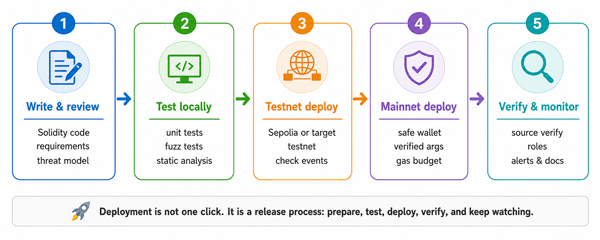
Figure 1: A practical smart contract deployment workflow.
3. Key Terms Beginners Should Know
| Term | Meaning | Why it matters in deployment |
|---|---|---|
| Source code | Human-readable contract code, often written in Solidity. | This is what developers review, test, audit, and verify. |
| Bytecode | Machine-readable code deployed to the blockchain. | The blockchain stores bytecode, not your original source files. |
| ABI | Application Binary Interface; a description of contract functions and events. | Wallets, frontends, and scripts use the ABI to interact with the contract. |
| Constructor | A function-like setup step that runs once during deployment. | Constructor arguments must be correct because they may set owners, token names, addresses, and limits. |
| Deployer wallet | The wallet that sends the deployment transaction. | It pays gas and may initially receive ownership or admin rights. |
| Contract address | The on-chain address where the deployed contract lives. | Users and applications need this address to interact with the contract. |
| Gas | The fee paid to execute blockchain computation. | Deployment can be expensive because storing contract code costs gas. |
| Verification | Publishing source code and compiler settings so others can match it to bytecode. | Verification improves transparency and makes the contract easier to inspect. |
| Proxy contract | A contract that delegates calls to implementation logic. | Used for upgradeable contracts, but it adds complexity and admin risk. |
4. How Smart Contract Deployment Works Technically
A smart contract deployment usually follows this technical path:
- The developer writes source code, commonly in Solidity for EVM networks.
- The compiler converts the source code into bytecode and produces an ABI.
- A deployment script or wallet creates a transaction containing the bytecode and encoded constructor arguments.
- The deployer signs the transaction with a private key or hardware wallet.
- The transaction is broadcast to the blockchain network.
- Validators include the transaction in a block if it is valid and the deployer has enough funds for gas.
- The blockchain runs the contract creation code. If it succeeds, a new contract address is created.
- The deployed runtime bytecode remains at that address. Users and applications interact with it by sending transactions or making read calls.
The exact steps vary by blockchain, but the key idea is the same: deployment changes a contract from private code into public blockchain infrastructure.
5. Smart Contract Deployment Prerequisites
Before deploying a smart contract, make sure you have the following ready:
| Requirement | Beginner explanation | Practical tip |
|---|---|---|
| A tested contract | Your smart contract should compile and pass tests. | Do not deploy code that has only been checked manually. |
| Development tool | A framework such as Hardhat, Foundry, Remix, or Truffle. | Use Remix for learning; use Hardhat or Foundry for serious projects. |
| Wallet | A wallet such as MetaMask, a hardware wallet, or a multisig wallet. | Do not store mainnet deployer private keys in plain text. |
| Network RPC endpoint | A connection to the blockchain network. | Use a reliable provider or your own node. |
| Testnet funds | Free test tokens for a testnet such as Sepolia. | Use faucets carefully and test with the same flow you will use for mainnet. |
| Mainnet funds | Real cryptocurrency to pay deployment gas. | Estimate fees before launch and keep a buffer. |
| Constructor arguments | Values passed during deployment. | Double-check addresses, token supply, owners, fees, and limits. |
| Security review | Testing, code review, static analysis, and possibly an audit. | The more value the contract will control, the stronger the review should be. |
| Verification plan | Compiler version, optimization settings, source files, and explorer API keys. | Verification is easier when planned before deployment. |
6. Smart Contract Deployment Tools Compared
There is no single best tool for every project. The right choice depends on your experience level, project size, and security needs.
| Tool | Best for | Strengths | Limitations |
|---|---|---|---|
| Remix IDE | Beginners and quick prototypes | Runs in the browser, simple interface, easy first deployment. | Less ideal for large teams, advanced testing, or repeatable production releases. |
| Hardhat | JavaScript/TypeScript projects | Good plugin ecosystem, testing tools, deployment scripts, verification support. | Requires Node.js and project setup. |
| Foundry | Advanced Solidity developers | Fast tests, Solidity-based tests, fuzzing support, strong CLI workflow. | Command-line focused and may feel harder for beginners. |
| Truffle | Older Ethereum projects | Established tooling and migration scripts. | Many new projects now prefer Hardhat or Foundry. |
| OpenZeppelin Contracts | Secure reusable contract components | Battle-tested implementations for common standards such as ERC-20 and ERC-721. | You still need to understand and configure the contracts correctly. |
| OpenZeppelin Upgrades / Defender | Upgradeable and controlled production deployments | Helps with proxy deployments, admin workflows, and safer operations. | Upgradeable designs are more complex than simple immutable contracts. |
7. Example: Deploying a Simple Smart Contract
The following example shows the general idea of deploying a simple Solidity contract. It is intentionally basic so beginners can understand the deployment flow. For production, you would add more tests, security checks, access controls, monitoring, and deployment reviews.
7.1 Example contract: MessageStore.sol
// SPDX-License-Identifier: MIT
pragma solidity ^0.8.24;

contract MessageStore {
    string private message;
    address public owner;

    event MessageChanged(string newMessage);

    constructor(string memory initialMessage) {
        message = initialMessage;
        owner = msg.sender;
    }

    function setMessage(string calldata newMessage) external {
        require(msg.sender == owner, "Only owner");
        message = newMessage;
        emit MessageChanged(newMessage);
    }

    function getMessage() external view returns (string memory) {
        return message;
    }
}
7.2 What this contract does
- Stores a text message on-chain.
- Sets the deployer as the owner during deployment.
- Allows only the owner to update the message.
- Emits an event whenever the message changes.
7.3 Beginner deployment flow with Remix
- Open Remix IDE in your browser.
- Create a new file named MessageStore.sol and paste the contract code.
- Compile the contract using a compatible Solidity compiler version.
- Connect MetaMask to a testnet such as Sepolia.
- In the Deploy & Run tab, choose Injected Provider so Remix uses your wallet.
- Enter a constructor message such as "Hello testnet".
- Click Deploy and approve the transaction in your wallet.
- Wait for the transaction to confirm.
- Copy the contract address and test getMessage and setMessage.
- Verify the contract source code on the relevant block explorer if supported.
7.4 Production deployment flow with Hardhat
A serious deployment should be repeatable. Scripts are safer than manual clicking because they reduce mistakes and create a record of what was deployed.
// scripts/deploy.ts (simplified example)
import { ethers } from "hardhat";

async function main() {
  const MessageStore = await ethers.getContractFactory("MessageStore");
  const contract = await MessageStore.deploy("Hello mainnet");
  await contract.waitForDeployment();

  console.log("MessageStore deployed to:", await contract.getAddress());
}

main().catch((error) => {
  console.error(error);
  process.exitCode = 1;
});
Typical Hardhat commands may include compiling, testing, deploying, and verifying. The exact syntax depends on your Hardhat version and plugins, so always follow the current official Hardhat documentation for your setup.
8. Testnet vs Mainnet Deployment
| Factor | Testnet deployment | Mainnet deployment |
|---|---|---|
| Purpose | Practice, testing, integration checks. | Real users, real assets, production use. |
| Funds | Test tokens with no market value. | Real cryptocurrency for gas and possibly real locked value. |
| Risk | Low financial risk but still useful for catching mistakes. | High risk because bugs may be permanent and costly. |
| Speed of iteration | Fast and flexible. | Slow and controlled; changes should go through review. |
| Verification | Recommended for testing frontend and explorer interactions. | Strongly recommended for transparency and trust. |
| Ownership setup | Can be informal for learning. | Should use secure admin controls, preferably multisig or governance for valuable contracts. |
9. Deployment Costs and Gas Fees
Deployment usually costs more gas than a normal token transfer because the blockchain must store contract code and run constructor logic. The cost depends on the network, contract size, constructor complexity, current gas price, and whether you deploy one contract or many contracts.
Ways to reduce unnecessary deployment cost include removing unused code, using libraries carefully, choosing efficient data structures, avoiding heavy constructor loops, and testing gas usage before mainnet. However, do not sacrifice safety or readability just to save a small amount of gas. A cheap but insecure contract is not a good deployment.
10. Contract Verification After Deployment
Contract verification means publishing the source code and compiler settings so a block explorer or verification service can confirm that the source compiles to the same bytecode deployed on-chain. Hardhat documentation explains that verification makes the source code public and lets others compare compiled bytecode with deployed bytecode. This is especially important on open platforms because users, auditors, and tools can inspect what the contract actually does.
- Verify as soon as possible after deployment.
- Use the exact compiler version used for deployment.
- Use the same optimizer settings and constructor arguments.
- Keep build artifacts and deployment logs.
- Verify proxy implementations and proxy contracts when using upgradeable contracts.
11. Smart Contract Deployment Risks
The biggest deployment risks are usually not caused by the blockchain itself. They come from rushed releases, wrong configuration, weak key management, missing tests, misunderstood upgradeability, and poor operational planning.
| Risk | Example | How to reduce it |
|---|---|---|
| Wrong constructor arguments | Owner address, token supply, oracle address, fee recipient, or treasury address is wrong. | Use deployment checklists, config files, peer review, and dry runs. |
| Private key exposure | The deployer key is stored in a public repository or shared chat. | Use environment variables, secret managers, hardware wallets, or multisig workflows. |
| Untested production path | The contract was tested locally but never tested with the real frontend and wallet flow. | Run a full testnet rehearsal before mainnet. |
| Unverified source code | Users cannot easily inspect or trust the deployed contract. | Verify source code and publish deployment details. |
| Incorrect access control | A public function allows anyone to pause, mint, withdraw, or upgrade. | Write role-based tests and review every privileged function. |
| Proxy storage collision | An upgrade changes storage layout and corrupts contract state. | Use upgrade tools, storage layout checks, and avoid unsafe upgrade patterns. |
| Admin key centralization | One wallet can upgrade or drain the system. | Use multisig, timelocks, role separation, and transparent governance. |
| No monitoring | A bug or exploit happens but the team notices late. | Set alerts for events, balances, ownership changes, upgrades, and unusual activity. |
12. Immutable vs Upgradeable Deployment
| Approach | How it works | Pros | Cons | Best use case |
|---|---|---|---|---|
| Immutable contract | The deployed code cannot be changed directly. | Simple, transparent, fewer admin risks. | Bugs may require redeployment and migration. | Small, well-tested contracts or systems where immutability is a core trust feature. |
| Upgradeable proxy | Users interact with a proxy that points to an implementation contract that can be changed. | Bugs can be fixed and features can be added. | More complexity, admin risk, storage layout risk, and governance burden. | Large applications that need long-term maintenance and have strong upgrade controls. |
| Modular redeployment | Separate components can be replaced while core contracts remain stable. | Limits blast radius and supports gradual upgrades. | Requires careful architecture and integration planning. | Protocols with multiple independent modules. |
Upgradeable contracts are not automatically safer. They trade one type of risk for another. If you use them, document who can upgrade, how upgrades are reviewed, whether there is a timelock, and how users can see proposed changes.
13. Smart Contract Deployment Best Practices
13.1 Treat deployment as a release, not a quick task
Create a deployment plan with a checklist, roles, dates, addresses, gas budget, rollback or pause strategy, and communication plan. The more value the contract controls, the more formal the release process should be.
13.2 Use the latest safe compiler version for your project
The Solidity documentation advises using the latest released Solidity version for deployment because security fixes are generally provided for the latest version. In practice, use a modern stable compiler version, pin it in your project, and test thoroughly before deploying.
13.3 Pin versions and keep builds reproducible
- Pin the Solidity compiler version instead of using a floating range for production builds.
- Commit lock files such as package-lock.json, pnpm-lock.yaml, or foundry.lock when applicable.
- Save deployment artifacts, ABI files, bytecode, constructor arguments, and transaction hashes.
- Use separate configuration files for each network.
13.4 Test beyond the happy path
A contract that works in one simple demo can still fail in production. Test failure cases, boundary values, permission checks, reverts, events, gas limits, upgrades, and integrations with tokens, oracles, bridges, and frontends.
13.5 Review all privileged functions
List every function that can pause, upgrade, mint, burn, withdraw, change fees, change addresses, or modify roles. Confirm who can call each function and what happens if that account is compromised.
13.6 Use secure admin ownership
For valuable production contracts, a single externally owned account is usually too risky for admin control. Consider a multisig wallet, timelock, or governance system. Also make sure ownership is transferred after deployment if the deployer wallet should not remain the owner.
13.7 Verify contracts and publish addresses
Publish official contract addresses in a place users can trust, such as your documentation, website, GitHub release notes, or an announcement signed by the project. Warn users against interacting with random addresses shared in comments or direct messages.
13.8 Monitor after launch
Deployment is not finished when the transaction confirms. Monitor contract events, balances, ownership changes, proxy upgrades, unusual transaction patterns, failed transactions, and frontend errors. OpenZeppelin’s security guidance emphasizes continuous improvement and monitoring because threats and network conditions change over time.
14. Pre-Deployment Checklist
| Area | Checklist item | Done? |
|---|---|---|
| Code | Contract compiles with pinned compiler version. | |
| Code | No unused dangerous functions or test-only code remain. | |
| Testing | Unit, integration, permission, revert, and edge-case tests pass. | |
| Testing | Deployment script has been tested on a local fork or testnet. | |
| Security | Static analysis and manual review completed. | |
| Security | Audit completed if the contract controls meaningful value. | |
| Configuration | Constructor arguments reviewed by at least two people. | |
| Configuration | Network, chain ID, RPC URL, deployer address, and gas settings verified. | |
| Keys | Private keys are not stored in source code or shared files. | |
| Access control | Owner/admin roles are planned and documented. | |
| Upgradeability | Proxy admin, implementation, initializer, and storage layout checked if applicable. | |
| Verification | Explorer verification method is ready. | |
| Communication | Official addresses and user guidance are ready to publish. | |
| Monitoring | Alerts and incident response contacts are ready. |
15. Post-Deployment Checklist
- Confirm the deployment transaction succeeded on the block explorer.
- Record the contract address, transaction hash, deployer address, chain ID, compiler version, and constructor arguments.
- Verify the source code on the appropriate explorer or verification service.
- Run read-only checks against important variables such as owner, token name, supply, limits, oracle address, treasury address, and pause status.
- Run a small safe interaction if appropriate, such as calling a read function or performing a tiny test transaction.
- Transfer admin ownership to the correct multisig, timelock, or governance contract.
- Remove temporary deployer permissions if they are no longer needed.
- Update frontend environment variables and documentation.
- Publish official addresses in trusted channels.
- Start monitoring and keep deployment artifacts backed up.
16. Common Smart Contract Deployment Mistakes
- Deploying directly to mainnet without a full testnet rehearsal.
- Using the wrong network in the wallet or deployment script.
- Passing the wrong constructor argument or address.
- Forgetting to call an initializer in an upgradeable contract.
- Leaving ownership with a temporary deployer wallet.
- Not verifying source code after deployment.
- Using outdated dependencies without checking known issues.
- Hardcoding addresses that differ across networks.
- Not saving deployment artifacts and transaction hashes.
- Assuming upgradeability removes the need for careful testing.
17. Real-World Deployment Scenarios
17.1 Scenario 1: Deploying an ERC-20 token
For an ERC-20 token, the most important deployment checks include token name, symbol, decimals, initial supply, minting rights, ownership, pause controls, and whether the token is fixed-supply or mintable. If the token will be listed on a DEX or used in a protocol, publish the verified contract address clearly to reduce scam-copy risk.
17.2 Scenario 2: Deploying an NFT collection
For an NFT collection, check mint price, max supply, base URI, reveal mechanics, royalty settings, allowlist logic, withdrawal address, and owner permissions. Test minting on a testnet with the same wallet flow your users will use.
17.3 Scenario 3: Deploying a DeFi contract
For DeFi contracts, deployment risk is much higher because contracts may hold funds and interact with external protocols. Review oracle dependencies, slippage assumptions, upgrade controls, emergency pause logic, withdrawal limits, token approvals, and integration risks. A professional security audit is strongly recommended before handling significant value.
17.4 Scenario 4: Deploying an upgradeable contract
For upgradeable contracts, check proxy type, initializer protection, admin roles, implementation address, storage layout, upgrade authorization, and explorer verification for both proxy and implementation. Never treat proxy deployment as a normal contract deployment with a constructor unless your tool explicitly handles the pattern correctly.
18. Beginner-Friendly Mental Model
Think of smart contract deployment like launching a public vending machine that can hold money. Before launch, you can change the design freely. After launch, people may put real money into it. If the machine has a design flaw, everyone can see it, and attackers can try to exploit it. That is why deployment needs testing, review, secure keys, clear ownership, and monitoring.
19. FAQs About Smart Contract Deployment
19.1 What is smart contract deployment?
It is the process of publishing compiled smart contract code to a blockchain so it receives a contract address and can be used by users, wallets, apps, and other contracts.
19.2 Can I change a smart contract after deployment?
A normal immutable smart contract cannot be changed directly. You may deploy a new version and migrate users, or design the system with an upgradeable proxy. Upgradeability must be planned carefully because it adds admin and security risks.
19.3 Do I need to deploy to a testnet first?
Yes, for almost every serious project. A testnet deployment helps you catch configuration, wallet, frontend, and verification problems before using real funds.
19.4 How much does smart contract deployment cost?
The cost depends on the network, gas price, contract size, and constructor logic. Deploying to Ethereum mainnet is usually more expensive than deploying to many layer 2 networks or testnets.
19.5 What is a contract address?
A contract address is the blockchain address created when deployment succeeds. Users and applications use this address to interact with the contract.
19.6 What is source code verification?
Verification publishes source code and compiler settings so others can confirm that the source matches the deployed bytecode. It improves transparency and makes the contract easier to inspect.
19.7 Is Remix enough for deployment?
Remix is good for learning and small experiments. For production, a scripted and repeatable workflow with tests, version control, deployment logs, and verification is usually safer.
19.8 Should I use an upgradeable contract?
Use upgradeability only when you truly need it and can manage the extra risk. Immutable contracts are simpler. Upgradeable contracts require careful admin control, storage layout checks, and transparent governance.
19.9 What happens if deployment fails?
The transaction may revert, no usable contract is created, and you still pay some gas for the failed execution. Review the error, fix the cause, and test again before retrying.
19.10 Who should own a deployed smart contract?
For valuable production systems, ownership should usually be controlled by a secure multisig, timelock, or governance system rather than a single personal wallet.
20. Final Thoughts
Smart contract deployment is where code becomes public blockchain infrastructure. A safe deployment requires more than a working contract. You need a tested build, secure key handling, reviewed configuration, testnet rehearsal, source verification, clear admin controls, and post-launch monitoring. Beginners should start with small testnet deployments, learn the full workflow, and only move to mainnet when the contract, scripts, and operational plan are ready.
Sources Consulted and Checked
These sources were consulted and checked while preparing this article to support accuracy and reliability.
- Ethereum.org - Deploying smart contracts
- Ethereum.org - Smart contract security resources
- Solidity documentation - Security considerations and compiler guidance
- Hardhat documentation - Verifying smart contracts
- OpenZeppelin Contracts documentation
- OpenZeppelin - Secure smart contract development guidance
Reader Advice
This article is provided for educational and informational purposes only. It is not legal, financial, investment, cybersecurity, or personalized professional advice, and it does not recommend deploying or interacting with any particular smart contract, token, protocol, or blockchain network. Smart contract deployment can involve permanent code, transaction fees, loss of funds, private-key exposure, software vulnerabilities, governance risks, and changing network conditions. Laws, regulations, platform policies, technical standards, fees, tools, and statistics may change over time and vary by country or region. Before making decisions or deploying code that may control assets or affect users, verify current information through official sources, test carefully, use appropriate security reviews, and obtain qualified professional advice where needed.