S&P 500 vs Dow Jones: Which Index Should Investors Follow?
1. Quick answer: which index should beginners follow?
For most beginners, the S&P 500 is the more useful index to follow because it gives a broader picture of large U.S. companies. It includes about 500 leading companies and represents roughly 80% of available U.S. stock market capitalization, according to S&P Dow Jones Indices. The Dow Jones Industrial Average is still important, especially in news headlines, but it is narrower because it tracks only 30 companies.
A simple way to think about it: the S&P 500 is like checking the temperature of a large city, while the Dow is like checking the temperature in one well-known neighborhood. Both can tell you something, but one gives a wider reading.
That does not mean the Dow is useless. The Dow is old, famous, easy to recognize, and often used by TV anchors and financial news sites. But if a beginner wants to understand what is happening to the broad U.S. stock market, compare portfolio performance, or learn about low-cost index funds and ETFs, the S&P 500 usually gives more practical information.
1.1 S&P 500 vs Dow Jones at a glance
| Feature | S&P 500 | Dow Jones Industrial Average |
|---|---|---|
| Number of companies | About 500 | 30 |
| Weighting method | Float-adjusted market-cap weighted | Price weighted |
| Best for | Broad U.S. large-cap market view | Fast blue-chip market snapshot |
| Beginner usefulness | Very high for market context and index investing | Useful for headlines, less useful as a full portfolio benchmark |
| Main weakness | Can be heavily influenced by the largest technology and mega-cap companies | Only 30 stocks; high-priced stocks can move the index more than larger companies |
| Common investing products | S&P 500 index funds and ETFs | Dow-tracking ETFs exist, but are less commonly used as a core benchmark |
2. What is the S&P 500?
The S&P 500 is a stock market index designed to measure the performance of leading large-cap U.S. companies. It is not a company, not an exchange, and not something you buy directly. It is a benchmark: a measuring tool.
When people say “the market is up today,” they often mean the S&P 500 moved higher. That is because it is widely regarded as one of the best single gauges of large-cap U.S. equities. It includes companies across major sectors such as technology, financials, health care, consumer goods, industrials, energy, utilities, real estate, and communication services.
The S&P 500 is often used by investors, financial advisors, retirement planners, brokerage platforms, and ETF providers because it answers a practical question: “How are major U.S. stocks doing overall?”
2.1 What beginners should know about the S&P 500
- It contains about 500 large U.S. companies, not exactly every stock in America.
- It is weighted by float-adjusted market capitalization, which means larger publicly tradable companies have a bigger effect on the index.
- It is commonly used as a benchmark for mutual funds, ETFs, retirement accounts, and long-term portfolio performance.
- It can still fall sharply. “Diversified” does not mean “safe from losses.”
- It is U.S.-focused. It does not replace international diversification.
3. What is the Dow Jones Industrial Average?
The Dow Jones Industrial Average, often called “the Dow,” is a stock market index made up of 30 prominent U.S. companies. It is one of the oldest and most recognized market indexes in the world, which is why news headlines still often say, “The Dow rose 300 points” or “The Dow fell 500 points.”
The Dow was created in the 19th century, long before modern index funds, ETFs, online brokerage accounts, and 401(k) dashboards. Its age and name recognition make it culturally powerful. But its design is much simpler and narrower than the S&P 500.
The biggest beginner lesson: the Dow is price weighted. A company with a higher share price can have more influence on the Dow than a company with a lower share price, even if the lower-priced company is larger by total market value. This is why the Dow can sometimes move differently from the S&P 500.
3.1 How the S&P 500 is calculated in plain English
The S&P 500 gives more weight to companies with larger float-adjusted market values. “Float-adjusted” means the calculation focuses on shares available for public trading, rather than all shares that may exist. In plain English, a giant company with a huge public market value matters more to the index than a smaller company.
Example: Suppose a large technology company falls 3% and a small utility company rises 3%. The S&P 500 may still fall if the technology company has a much larger weight. This is not a bug; it is how a market-cap weighted index is designed.
3.2 How the Dow is calculated in plain English
The Dow is price weighted. That means the dollar price movement of each stock matters more than the company’s total size. If a Dow stock with a high share price rises $10, it can move the index more than a lower-priced Dow stock rising by the same percentage.
Example: A $500 stock moving up $5 and a $50 stock moving up $5 do not represent the same percentage gain. The first rose 1%; the second rose 10%. But in a price-weighted index, both $5 price changes matter similarly before the divisor adjustment. This is why beginners should be careful when interpreting Dow points.
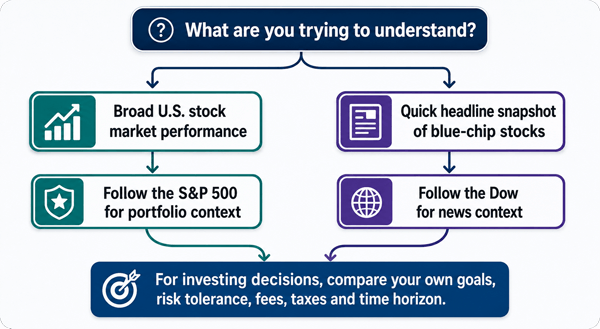
Figure 1. Choosing the most relevant index for market or portfolio context.
4. S&P 500 vs Dow Jones: the real differences that matter
| Question | Why it matters | S&P 500 | Dow Jones |
|---|---|---|---|
| How broad is it? | Broader indexes usually give a better market picture. | About 500 companies across all major sectors. | Only 30 companies. |
| What moves it most? | This affects how you interpret daily gains and losses. | The largest market-value companies. | Higher-priced stocks. |
| Is it good for portfolio comparison? | Investors need a fair benchmark. | Often useful for U.S. large-cap portfolio comparison. | Less complete because it is narrow and price weighted. |
| Is it easy to understand? | Beginners need a simple starting point. | Slightly more technical but more representative. | Simple headline number, but weighting can mislead. |
| Is it investable through funds? | Investors often use index funds and ETFs. | Many low-cost S&P 500 index funds and ETFs exist. | Dow ETFs exist, but the Dow is less common as a core portfolio benchmark. |
A beginner might see “Dow up, S&P 500 down” and feel confused. That can happen because the two indexes are built differently. The Dow may rise because a few high-priced industrial or financial stocks had a good day, while the S&P 500 may fall because large technology or communication services companies declined.
In June 2026 market coverage, for example, Reuters reported a day when megacap technology weakness pulled the S&P 500 and Nasdaq lower while the Dow moved higher. That kind of split is exactly why investors should understand what each index is actually measuring.
The practical lesson is simple: do not judge the whole stock market from one headline number. Look at the index that matches your question.
5. Which index should investors follow?
Investors can follow both, but they should use them for different jobs.
| Investor question | Better index to check | Reason |
|---|---|---|
| “How is the broad U.S. stock market doing?” | S&P 500 | It covers far more companies and sectors. |
| “Why are financial news headlines moving today?” | Both | News outlets quote both; compare them for context. |
| “How is my U.S. large-cap index fund doing?” | S&P 500 | Many index funds directly track or compare against it. |
| “Are blue-chip industrial and established companies having a good day?” | Dow | The Dow is a simple blue-chip snapshot. |
| “Should I panic because the Dow fell 700 points?” | Neither alone | Check percentage moves, sectors, bond yields, earnings, and your plan. |
6. How beginners can use the S&P 500 and Dow without getting misled
- Look at percentage moves, not just points. A 500-point Dow move sounds dramatic, but the percentage move gives better context. A 1% move in any index is easier to compare than a point move.
- Check more than one index. If the S&P 500 is down but the Dow is up, the market may be mixed rather than clearly weak or strong.
- Compare your portfolio to the right benchmark. A portfolio full of U.S. large-cap stocks may be reasonably compared with the S&P 500. A portfolio with international stocks, bonds, cash, real estate, or small-cap funds should not be judged only against the S&P 500.
- Do not treat index movement as a personal buy or sell signal. A daily index move does not know your age, income, debt, emergency fund, risk tolerance, tax situation, or investment timeline.
- Use indexes as a dashboard, not a steering wheel. Indexes help you understand the road conditions. They should not force emotional decisions.
7. Practical example: two investors reading the same market headline
Headline: “Dow rises while S&P 500 slips as megacap tech weighs on the market.”
Investor A owns a low-cost S&P 500 ETF in a retirement portfolio. This investor should focus on the S&P 500 because it is closer to the fund’s benchmark. A Dow gain does not necessarily mean their ETF had a good day.
Investor B owns a small group of dividend-paying blue-chip stocks, including several Dow components. This investor may find the Dow useful as a rough mood check, but it is still not a perfect benchmark because a personal portfolio may have different weights and risks.
Investor C has a diversified portfolio with U.S. stocks, international stocks, bonds, and cash. This investor should not compare everything to either index. A blended benchmark or financial planning review may be more useful.
8. Can you invest directly in the S&P 500 or Dow?
You cannot buy an index directly. An index is a calculation. However, investors can buy mutual funds or exchange-traded funds (ETFs) that try to track an index. This is where terms such as “S&P 500 ETF,” “Dow ETF,” “index fund,” “expense ratio,” and “tax-efficient investing” become important.
For many long-term investors, low-cost index funds are popular because they offer broad exposure, transparent holdings, and usually lower fees than many actively managed funds. But lower cost does not remove market risk. An S&P 500 fund can lose money, especially during bear markets, recessions, rate shocks, or periods when large companies become overvalued.
| Term | Plain-English meaning | Why it matters |
|---|---|---|
| ETF | A fund that trades like a stock. | Popular for brokerage accounts and tax-aware investing. |
| Index fund | A fund designed to track an index. | Often used in retirement portfolios and 401(k) plans. |
| Expense ratio | Annual fund cost as a percentage of assets. | Lower fees can improve long-term net returns, all else equal. |
| Tracking error | Difference between fund return and index return. | Shows how closely a fund follows its benchmark. |
| Diversification | Spreading money across many holdings. | Can reduce single-company risk but not eliminate market risk. |
9. Beginner-friendly investing lessons from both indexes
9.1 Lesson 1: Bigger index does not always mean better every day
The S&P 500 is broader than the Dow, but that does not mean it will outperform every day, month, or year. If the largest companies are weak, the S&P 500 can struggle even when many smaller parts of the market are doing fine.
9.2 Lesson 2: Famous does not mean complete
The Dow is famous, but it is not the whole market. A Dow headline can be useful, but beginners should not build their entire market view around 30 stocks.
9.3 Lesson 3: Index investing is simple, but not effortless
Many people like index funds because they are easy to understand and low maintenance. The hard part is emotional discipline: staying consistent during volatility, avoiding performance chasing, and not confusing short-term headlines with long-term planning.
9.4 Lesson 4: Sector concentration matters
The S&P 500 can become heavily influenced by large companies in dominant sectors. This is not automatically bad, but investors should know what they own. A fund that looks diversified by company count may still have meaningful concentration in the largest names.
10. Common mistakes beginners make
| Mistake | Why it is a problem | Better habit |
|---|---|---|
| Reacting to Dow points | Point moves sound scarier than percentage moves. | Check percentage change and longer-term trend. |
| Thinking the Dow is “the market” | It tracks only 30 companies. | Use the S&P 500 for broader U.S. large-cap context. |
| Comparing every portfolio to the S&P 500 | Many portfolios own assets outside the S&P 500. | Use a benchmark that matches your holdings. |
| Assuming index funds are risk-free | They can fall during market downturns. | Match risk level to time horizon and goals. |
| Ignoring fees and taxes | Costs and taxable events reduce net returns. | Compare expense ratios, account types, and tax impact. |
11. Actionable checklist: how to follow these indexes like a smart beginner
- Use the S&P 500 as your main U.S. large-cap market benchmark.
- Use the Dow as a quick news headline indicator, not as your only market guide.
- Focus on percentage changes rather than point changes.
- Compare index performance with your own portfolio only when the benchmark fits your holdings.
- Before buying any index fund or ETF, review expense ratio, holdings, tracking history, bid-ask spread, tax considerations, and account type.
- Avoid making trades only because an index had one bad or good day.
- Review your plan during calm periods, not only during market panic.
12. Frequently Asked Questions About the S&P 500 and Dow Jones
12.1 Is the S&P 500 better than the Dow Jones?
For understanding the broad U.S. large-cap stock market, the S&P 500 is usually more useful because it includes many more companies and is market-cap weighted. The Dow is better known in headlines but less diversified.
12.2 Why do the S&P 500 and Dow move differently?
They move differently because they contain different numbers of companies and use different weighting systems. The S&P 500 is influenced most by the largest market-value companies. The Dow is influenced by stock price movements of its 30 components.
12.3 Should beginners invest in the S&P 500?
Many beginners study S&P 500 index funds because they are simple, diversified within U.S. large-cap stocks, and often low cost. But whether they are suitable depends on the investor’s goals, time horizon, risk tolerance, account type, taxes, and broader asset allocation.
12.4 Is the Dow Jones outdated?
The Dow is not useless, but it is old-fashioned in design. Its price-weighted structure and small number of companies make it less complete than broader indexes. It remains valuable as a historical and media benchmark.
12.5 Which index should I check every day?
Most long-term investors do not need to check either index every day. If you are learning markets, the S&P 500 gives broader context. The Dow can help you understand news coverage, but daily checking can encourage emotional decisions.
12.6 What is the safest way to use these indexes?
Use them as educational tools and benchmarks, not as automatic trading signals. Combine index information with a written financial plan, diversification, emergency savings, risk management, and professional advice when your situation is complex.
13. Final verdict
Beginners should generally follow the S&P 500 first because it gives a broader, more practical view of major U.S. stocks and is more connected to common index funds, ETFs, retirement portfolios, and benchmark comparisons. The Dow Jones Industrial Average is still worth knowing because it appears everywhere in financial media, but it should not be mistaken for the entire market.
The best habit is not choosing one headline forever. The best habit is asking: “What am I trying to measure?” For broad U.S. stock market performance, check the S&P 500. For a quick blue-chip headline snapshot, check the Dow. For your own money, check your personal plan.
Sources Consulted and Checked
These sources were consulted and checked while preparing this article to support accuracy, clarity, and reliable context.
- S&P Dow Jones Indices, “S&P 500” index page: states the S&P 500 includes 500 leading companies and covers approximately 80% of available U.S. market capitalization. https://www.spglobal.com/spdji/en/indices/equity/sp-500/
- S&P Dow Jones Indices, “Dow Jones Industrial Average” index page: official source for the Dow Jones Industrial Average. https://www.spglobal.com/spdji/en/indices/equity/dow-jones-industrial-average/
- S&P Dow Jones Indices, S&P U.S. Indices Methodology: describes S&P U.S. Indices as weighted by float-adjusted market capitalization. https://www.spglobal.com/spdji/en/documents/methodologies/methodology-sp-us-indices.pdf
- Reuters market coverage, June 22, 2026: example of S&P 500/Nasdaq weakness from megacap technology while the Dow rose, illustrating why indexes can diverge. https://www.reuters.com/business/wall-st-futures-muted-investors-monitor-us-iran-negotiations-2026-06-22/
- FRED, Dow Jones Industrial Average series: source for historical DJIA data and index context. https://fred.stlouisfed.org/graph/?id=DJIA%2C
Reader Advice
This article is provided solely for educational and informational purposes and does not constitute personalized financial, investment, tax, or legal advice. It does not recommend that any reader buy, sell, or hold a particular security, fund, or investment product. Before making a financial decision, consider your goals, risk tolerance, time horizon, financial circumstances, fees, taxes, and the suitability of any investment for your broader portfolio.
Market conditions, index methodologies, fund details, laws, tax rules, and other relevant information may change over time or differ by jurisdiction and personal circumstances. Readers should verify important facts, figures, product terms, and current requirements through official and up-to-date sources. Where appropriate, seek guidance from a qualified and properly licensed financial, tax, or legal professional. All investments involve risk, including the possible loss of principal, and past performance does not guarantee future results.