Why Do Companies Go Public?
IPOs, Direct Listings, and Investor Impact
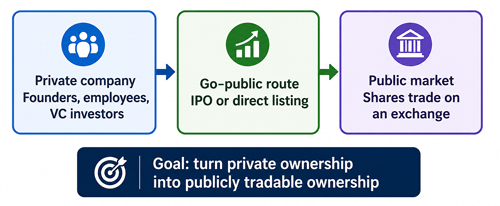
Figure 1: Going public turns private ownership into publicly tradable ownership.
1. What Does “Going Public” Mean?
A company is private when its shares are owned by a small group: founders, employees, venture capital firms, private equity investors, angel investors, or strategic partners. The shares do not trade freely on a public stock exchange. Ordinary investors usually cannot buy them through a normal brokerage account.
A company goes public when its shares become available for public trading on an exchange such as Nasdaq or the New York Stock Exchange. The U.S. SEC describes an IPO as the first time a company offers its shares of capital stock to the general public in a registered offering. A public listing also helps establish a trading market for the company’s shares. Source: SEC, “Initial Public Offerings (IPOs).”
In simple words, going public is like moving from a private club to a public marketplace. Before the listing, only selected people can own the shares. After the listing, many investors can buy or sell the stock, although access to the IPO allocation itself may still be limited.
2. Why Do Companies Go Public?
Companies do not go public for one single reason. They usually combine financial, strategic, and people-related goals.
| Reason | What it means in plain English | Investor impact |
|---|---|---|
| Raise capital | The company sells shares to collect money for growth, debt repayment, acquisitions, research, hiring, or expansion. | Helpful if capital is used productively; harmful if the company keeps needing cash without improving results. |
| Create liquidity | Early investors and employees may finally have a market where they can sell some shares. | Can increase selling pressure, especially around lock-up expiration dates. |
| Build credibility | Being public can raise brand recognition with customers, suppliers, lenders, and future employees. | Visibility can attract demand, but brand popularity is not the same as investment quality. |
| Set a market value | The public market gives the company a daily price and valuation. | Investors can compare the stock to public peers, but market prices can overreact. |
| Use stock as currency | Public shares can be used for employee compensation or acquisitions. | Can support growth, but stock compensation can dilute shareholders. |
| Let founders and funds exit gradually | Venture capital and private equity funds often need liquidity after holding for years. | A wave of insider selling can affect sentiment and supply. |
3. IPO vs Direct Listing: The Simple Difference
An IPO and a direct listing both take a company to the public market, but the mechanics are different.
| Feature | Traditional IPO | Direct listing |
|---|---|---|
| New shares | Usually yes. The company often issues new shares to raise money. | Often no in the classic model. Existing shares are listed for trading. Some rule changes allow certain primary capital-raising direct listings, but the classic direct listing is liquidity-focused. |
| Investment banks | Underwriters help price, market, allocate, and stabilize the offering. | Banks may advise, but there is typically no traditional underwritten sale. |
| Pricing | IPO price is set before trading begins, based on investor demand and negotiations. | A reference price may be provided, but the opening trade is discovered through exchange order flow. |
| Capital raised | Usually raises money for the company. | Usually focuses on allowing existing holders to sell; may not raise new money in the classic form. |
| Lock-up | Commonly restricts insiders from selling for a period, often 90 to 180 days depending on the deal. | Nasdaq states that direct listings can provide no lock-up period, allowing existing shareholders to sell immediately. |
| Best fit | Companies needing capital, marketing support, and price discovery through underwriters. | Well-known companies that do not need new cash and want a market-based opening price. |
4. How a Traditional IPO Works Step by Step
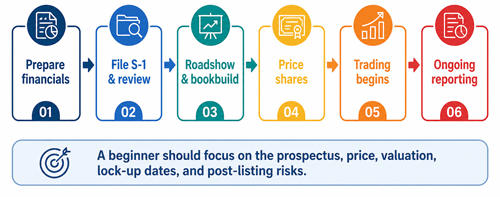
Figure 2: A simplified IPO timeline for beginners.
The IPO process can sound complicated, but the basic flow is understandable if you break it into stages.
4.1 Preparation
The company cleans up its financial statements, upgrades governance, hires auditors, prepares investor materials, and selects investment banks. This is where the private company starts behaving like a public company.
4.2 Registration Statement
The company files a registration statement, often Form S-1 in the United States. Investor.gov explains that a registration statement includes required disclosures and often includes a prospectus describing the company, the securities, and the offering.
4.3 SEC Review and Amendments
The SEC reviews the filing for disclosure quality. The company may amend the document several times before it becomes effective.
4.4 Roadshow and Bookbuilding
Management and bankers meet institutional investors. Investors indicate how much demand they may have at different prices. This helps the underwriters build the order book.
4.5 Pricing and Allocation
The company and underwriters choose the IPO price and allocate shares. Large institutional investors often receive much of the allocation. Retail investors may receive limited access depending on the broker and offering.
4.6 First Day of Trading
Shares begin trading publicly. The opening price may be higher or lower than the IPO price. Volatility is common because the market is discovering a fair value in real time.
4.7 Life as a Public Company
The company must report results, communicate with investors, follow exchange rules, and manage public scrutiny. Investors can now judge performance quarter by quarter.
5. How a Direct Listing Works Step by Step
A direct listing is simpler in one way and harder in another. It removes much of the traditional IPO sales process, but that also means there may be less price support and less controlled allocation.
In a direct listing, existing shareholders such as employees, founders, and early investors register shares for resale. On the listing day, buyers and sellers enter orders through the exchange. The opening price is formed by matching supply and demand. Spotify’s 2018 direct listing is a well-known example; Harvard Law School’s corporate governance forum notes that Spotify went public through a direct listing on the NYSE on April 3, 2018. Coinbase later used a direct listing for its Nasdaq debut, and its investor relations release stated that its Form S-1 for the public direct listing was declared effective by the SEC in April 2021.
Beginner takeaway
A direct listing does not automatically mean “cheap.” It simply means the path to market is different. The stock can still be expensive, volatile, or risky if the business fundamentals do not justify the price.
6. Practical Example: Two Fictional Companies
Imagine two companies with the same goal: they want public investors to value their businesses. Their choices may be different.
| Company | Situation | Likely route | Why |
|---|---|---|---|
| CloudTools Inc. | Fast-growing software company. Needs $500 million for sales expansion and acquisitions. | Traditional IPO | It wants to raise new capital and wants investment banks to market the story to large institutions. |
| StreamBox Ltd. | Well-known consumer platform. Has enough cash and wants employees to sell some shares. | Direct listing | It may not need new money. It mainly wants liquidity and a public market price. |
For investors, the question is not “Which route is cooler?” The question is: does the route match the company’s needs, and does the valuation make sense?
7. What Beginners Should Read Before Buying an IPO Stock
The most useful document is the prospectus. It is not exciting reading, but it is where the important clues are. Do not rely only on social media, headlines, influencer posts, or a broker’s short summary.
| Prospectus section | What to look for | Beginner question |
|---|---|---|
| Use of proceeds | How the company will use money raised in the IPO. | Is the money going into growth, debt repayment, acquisitions, or general corporate purposes? |
| Risk factors | Management’s legal disclosure of the biggest risks. | Which risks could seriously damage the business? |
| Revenue and growth | Sales trend over several years or quarters. | Is growth accelerating, slowing, or dependent on one temporary factor? |
| Profitability and cash flow | Net income, operating cash flow, free cash flow, and margins. | Can the company fund itself, or will it need more share issuance? |
| Customer concentration | Dependence on a few large customers. | What happens if one big customer leaves? |
| Share structure | Voting rights, dual-class shares, insider control. | Will public shareholders have meaningful voting power? |
| Dilution | Options, warrants, convertible securities, and stock compensation. | Could my ownership percentage be diluted later? |
| Lock-up details | When insiders can sell after the IPO. | Could a future selling wave pressure the stock? |
8. Investor Impact: Who Benefits and Who Carries Risk?
Going public affects several groups at the same time. This is why public listings can feel exciting and unfair at once.
| Group | Potential benefit | Potential risk or trade-off |
|---|---|---|
| Company | Raises capital, gains visibility, creates public currency. | Public reporting costs, market pressure, loss of privacy. |
| Founders and executives | Liquidity and higher profile. | More scrutiny, insider-sale criticism, performance pressure. |
| Employees | Stock options or RSUs may become easier to value and sell. | Share price volatility can affect morale and compensation. |
| Early investors | Exit opportunity after years of private risk. | May face lock-up limits or reputational concerns if selling too aggressively. |
| Retail investors | Can finally buy shares through a brokerage account. | May buy after institutions at a higher price, with less information advantage. |
| Institutional investors | May get IPO allocation and management access. | Large positions can be hard to exit if sentiment turns. |
9. IPO Pricing, First-Day Pops, and “Money Left on the Table”
One reason IPOs attract attention is the first-day “pop.” This happens when a stock begins trading above its IPO price. A pop can make early IPO buyers look smart, but it can also mean the company sold shares too cheaply compared with what public buyers were willing to pay.
From the company’s viewpoint, a moderate pop may be acceptable because it rewards new investors and creates positive attention. A huge pop can be frustrating because the company could have raised more money at a higher price. From a retail investor’s viewpoint, buying after a large pop can be risky because the easy gain may already be gone.
Academic IPO data from Jay Ritter at the University of Florida has long shown that IPOs can have positive average first-day returns but weaker long-run results depending on the period and sample. The practical lesson is simple: a hot first day does not prove a great long-term investment. Source: Ritter, “Initial Public Offerings: Updated Long-run Statistics.”
10. Direct Listing Pricing: More Market-Driven, but Not Risk-Free
In a direct listing, there is no traditional IPO price in the same way. The exchange may publish a reference price, but the actual opening price comes from matched buy and sell orders. This can feel more transparent because the market sets the price, but it can also create volatility. If many insiders want to sell at once, supply can be heavy. If the brand is popular and buyers rush in, the opening price can overshoot fundamentals.
Nasdaq describes direct listings as a path that can provide liquidity without raising capital and notes that existing shareholders may be able to cash out immediately because there may be no lock-up period. That feature is useful for employees and early investors, but public buyers should understand that immediate liquidity can also mean immediate selling pressure. Source: Nasdaq, “Learn About Direct Listings.”
11. The Lock-Up Period: One of the Most Overlooked IPO Dates
A lock-up agreement restricts certain insiders from selling shares for a defined period after an IPO. Investor.gov says investors can review the company’s IPO prospectus to find out whether a lock-up agreement exists and can find the prospectus through the SEC’s EDGAR database.
Why does this matter? Because when a lock-up expires, more shares may become available for sale. That does not always crash the stock, but it can change supply and sentiment. If employees, founders, or venture funds sell heavily, investors may ask whether insiders believe the stock is fully valued.
Practical tip
Before buying a recent IPO, search the prospectus for “lock-up,” “market standoff,” “shares eligible for future sale,” and “registration rights.” Add the lock-up expiration window to your investing calendar.
12. How Beginners Can Use IPO and Direct Listing Information
A beginner can use public listing information in three practical ways: to avoid bad decisions, to compare opportunities, and to understand market behavior.
- Avoid bad decisions: If a company has no profits, slowing growth, high debt, and a rich valuation, the brand name alone should not convince you to buy.
- Compare opportunities: An IPO stock should compete for your money against other public companies, index funds, bonds, and cash. You are not required to buy every exciting listing.
- Understand market behavior: IPOs often reveal what investors currently value: artificial intelligence, fintech, cybersecurity, biotech, consumer platforms, or profitable growth. This can help you read the broader market.
13. A Practical IPO Checklist for Retail Investors
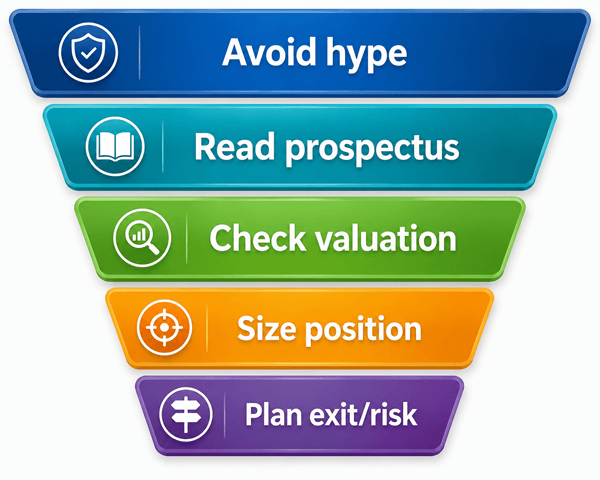
Figure 3: A simple risk-first funnel for IPO investing.
| Checklist item | Good sign | Warning sign |
|---|---|---|
| Business model | Easy to explain how the company makes money. | Revenue story is vague or depends on buzzwords. |
| Growth quality | Growth comes from repeat customers, pricing power, or expanding market share. | Growth is driven mainly by one-time demand or unsustainable discounts. |
| Margins | Margins are improving or already strong. | Losses widen as revenue grows. |
| Cash flow | Cash burn is manageable and funding runway is clear. | Company may need another capital raise soon. |
| Valuation | Price is reasonable versus peers and future growth. | Valuation assumes perfect execution for many years. |
| Governance | Board, voting rights, and disclosures are investor-friendly. | Insiders control voting power while public investors carry economic risk. |
| Supply pressure | Lock-up schedule is known and manageable. | Large insider unlock is approaching with weak fundamentals. |
| Position sizing | Small enough that a large loss will not damage your plan. | Investor puts too much money into one hot new stock. |
14. Common Beginner Mistakes
14.1 Buying Only Because the Company Is Famous
A popular product does not automatically mean an attractive stock. The stock price already reflects expectations.
14.2 Confusing Revenue Growth with Business Quality
A company can grow revenue while losing more money every year. Study gross margin, operating margin, and cash flow.
14.3 Ignoring Valuation
Even a great company can be a poor investment if the purchase price is too high.
14.4 Chasing the First-Day Move
A large first-day pop may attract attention, but buying after the move can leave you exposed to reversal.
14.5 Not Checking Share Structure
Dual-class shares can give founders control even when public investors own much of the economic value.
14.6 Forgetting Taxes and Fees
Short-term trading may create tax consequences. Brokerage access, commissions, and local rules vary by country.
14.7 Treating IPO Access as a Guaranteed Profit
Many brokers limit allocations, and some IPOs trade down after listing.
15. IPO vs Direct Listing vs Staying Private
| Path | Best for | Main advantage | Main downside |
|---|---|---|---|
| Traditional IPO | Company needs capital and wants banker-led distribution. | Raises money and provides structured marketing. | Higher costs, allocation issues, potential underpricing. |
| Direct listing | Company has strong brand, enough cash, and wants liquidity. | Market-driven opening and shareholder liquidity. | Less traditional price support and possible immediate selling. |
| Stay private | Company wants control and has private funding options. | Less public scrutiny and more flexibility. | Limited liquidity and fewer public investors can participate. |
16. What “Good” Looks Like in a Public Listing
A healthy public listing is not only about a high opening price. A better test is whether the company uses public-market access responsibly.
- The prospectus clearly explains the business, risks, and financials.
- The company raises capital for realistic, productive uses.
- Management communicates honestly and avoids promotional exaggeration.
- The valuation gives investors a fair chance of earning a return if the company executes.
- Employees and early investors get liquidity without creating extreme supply shocks.
- Public shareholders understand voting rights, dilution, and reporting obligations.
17. Frequently Asked Questions
17.1 Is an IPO Always a Good Investment?
No. An IPO is simply a way for a company to enter the public market. The investment quality depends on the business, valuation, financials, governance, and your purchase price.
17.2 Can Beginners Buy IPO Shares Before Trading Starts?
Sometimes, but access is limited. Many IPO allocations go to institutional investors. Some brokers offer retail IPO access, but eligibility and allocation sizes vary.
17.3 Why Would a Company Choose a Direct Listing Instead of an IPO?
A company may choose a direct listing if it does not need to raise new capital, already has strong brand awareness, and wants existing shareholders to sell into a public market.
17.4 What Is the Biggest Risk of Buying After a Direct Listing?
The opening price may be driven by excitement rather than fundamentals, and existing shareholders may be able to sell immediately.
17.5 What Is the Most Important IPO Document?
The prospectus, usually included in the registration statement. It explains the company, risks, financials, offering terms, use of proceeds, and share structure.
17.6 What Does Lock-Up Expiration Mean?
It is the point when certain insiders may be allowed to sell shares after restrictions end. Investors watch this date because additional supply can affect the stock price.
17.7 Should I Wait Before Buying a New Public Stock?
Many disciplined investors wait for one or more quarterly reports after listing. Waiting can reduce hype risk and provide more public information, but it can also mean missing early gains.
17.8 How Much of My Portfolio Should Go Into IPO Stocks?
There is no universal number. Beginners often keep speculative single-stock positions small so one bad outcome does not harm the broader plan.
18. Conclusion
Companies go public because public markets can provide capital, liquidity, visibility, and a tradable value for ownership. IPOs and direct listings are simply different routes to that result. An IPO is usually better when a company wants to raise new money and use investment banks to manage the offering. A direct listing can be better when the company already has cash and mainly wants liquidity and market-based price discovery.
For investors, the best approach is careful and boring: read the prospectus, understand the business, compare valuation, check lock-up dates, control position size, and avoid hype. A public listing can create opportunity, but the opportunity belongs to investors who treat it as due diligence, not entertainment.
Sources Consulted and Checked
The following authoritative and specialist sources were consulted and checked while preparing this article to support its accuracy and clarity.
- SEC: Initial Public Offerings (IPOs) - definition and registered offering framework.
- Investor.gov: Initial Public Offering (IPO) glossary and investor bulletin links.
- Investor.gov: Registration Statement - Form S-1 and prospectus disclosures.
- Investor.gov: Initial Public Offerings: Lockup Agreements - how to find lock-up information in a prospectus.
- Nasdaq: Learn About Direct Listings - direct listings, liquidity, and no lock-up discussion.
- NYSE: Choose Your Path to Public - direct listing overview and listing standards.
- Harvard Law School Forum on Corporate Governance: Spotify Case Study: Structuring and Executing a Direct Listing.
- Coinbase Investor Relations: public direct listing registration statement and Nasdaq listing date.
- Airbnb Investor Relations: IPO pricing announcement, December 2020.
- Jay R. Ritter, University of Florida: Initial Public Offerings: Updated Long-run Statistics.
Reader Advice
This article is provided solely for educational and general informational purposes. It does not constitute financial, investment, legal, tax, or other professional advice, and it should not be treated as a recommendation to buy, sell, or hold any security. Before making a decision, readers should assess their objectives, financial circumstances, risk tolerance, time horizon, tax position, and local legal or regulatory requirements, and should seek advice from a properly licensed or otherwise qualified professional where appropriate.
IPO terms, exchange rules, securities regulations, brokerage access, tax treatment, company disclosures, market conditions, prices, and other facts may change or may differ by country, investor category, platform, and transaction. Readers should therefore verify current facts, figures, dates, eligibility requirements, and official filings through relevant regulators, exchanges, company investor-relations pages, prospectuses, and other primary sources. Past performance, first-day gains, popularity, or market commentary do not guarantee future results, and investing can result in partial or total loss of capital.